The Awakening of the Senses: A Cinematic Prelude
Sunrise in the Alazani Valley, Georgia, is not merely the beginning of a day; it is a profound epiphany. Imagine a mist so dense it feels tactile, sliding down the slopes of the Caucasus like the veil of an ancient bride. Beneath that shroud, the earth exhales an intoxicating perfume: a primal blend of wet clay, freshly shorn grass, and that sweet, atavistic scent that only millennial vines can produce after a midnight storm. This is the smell of history itself fermenting.
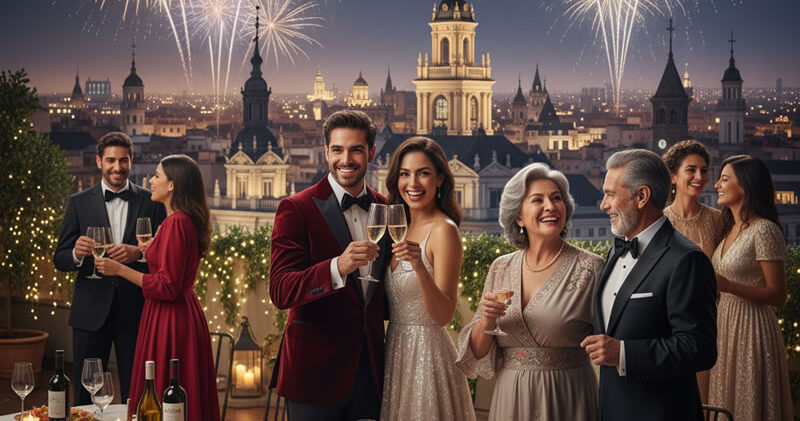
As Madrid stirs today under the hum of IMEX 2026, a different atmosphere is breathing life into the halls of La Nave. There is a corner where the air feels crisper, more vibrant, almost effervescent. This is the landing of Luna Global Travel, the ally who has decided that luxury is no longer about what you own, but about what you dare to feel. They have arrived to reveal that the true “Mecca” of wine is not found in the well-trodden paths of Bordeaux or Tuscany, but in a route spanning 12 countries that define the “Old World 2.0.”
We are talking about a belt of excellence stretching across the Caucasus, the Balkans, and Central Europe. Twelve nations bound by a thread of silk and tannins, where luxury manifests in the exclusivity of the authentic. This is not just a journey; it is a descent into the roots of civilization, orchestrated with the sophistication of Luna Global Travel. Here, the promise of a perfect glass of wine is not a marketing catchphrase; it is a guarantee that the first sip will make you forget the 21st century and transport you to a royal banquet circa 1800.

The Soul of the Earth: Context and Terroir
To understand this voyage, we must discuss Terroir—not as a dry geographical data point, but as the soul of a character in a Russian novel: complex, tormented, and ultimately sublime. The region Luna Global Travel presents this year in Madrid is a mosaic of microclimates that defy logic.
From the volcanic hills of Tokaj in Hungary, where the rhyolite and tuff soil seems to hold the sun’s heat only to infuse “liquid gold” into the grapes, to the coasts of Croatian Istria, where the Bora wind lashes the vines with a saline touch, every grape tells a story of survival. Here, the grape is not just fruit; it is a warrior. The Georgian Saperavi, for instance, is of such intensity—a “teinturier” variety with both dark skin and dark pulp—that it acts as a deep, mysterious character requiring expert hands and decades of patience to tame.
The climate along this 12-country route—stretching from the Moldavian steppes to the Slovenian valleys—is a game of contrasts. Scorching summers followed by lingering autumns allow Botrytis cinerea (noble rot) to perform its magic, transforming ordinary grapes into sugary jewels. This is a geography that has watched empires rise and fall, and that resilience is felt in the wine’s structure: a piercing acidity, an iron backbone, and a finish that lingers on the palate like the memory of a first love.


Cathedrals of Wine: The Emblematic Estates
In this grand display by Luna Global Travel at IMEX 2026, four names resonate with the power of a cork popping in a marble hall. These are not merely wineries; they are monuments to human ambition.
- Tsinandali Estate, Georgia: The Prince’s Palace
Architecture and Vibe: If luxury had a birth certificate in the Caucasus, it would read “Tsinandali.” This 19th-century estate was the home of Prince Alexander Chavchavadze, the man who taught Georgians to bottle their history in the European style. The architecture is a romantic fusion of a classical palace and English gardens, where high ceilings and wooden galleries invite elegant conspiracies.
The Oenotourism Experience: Descending into its cellars is a near-religious experience. The sound of a cork being drawn here isn’t an echo; it’s a conversation with the past. Luna Global Travel organizes private tastings in the Prince’s personal library, surrounded by bottles blanketed in the dust of two centuries. To feel the grain of French oak barrels in this setting is to be reminded that time is the most expensive ingredient in any cellar.
The Star Wine: Their Collector’s Saperavi. Imagine liquid velvet with notes of graphite, wild blackberry, and a touch of tobacco that evokes mountain sunrises. On the palate, it is a structural explosion; tannins that feel like a silk glove over an iron fist.
The Wow Factor: The secret tunnel connecting the winery to the palace, originally used to protect the family from invasions, now houses one of the world’s oldest wine collections. Dining there by candlelight is the closest you will ever get to being part of 19th-century royalty.




- Royal Tokaji, Hungary: The Alchemist of Gold
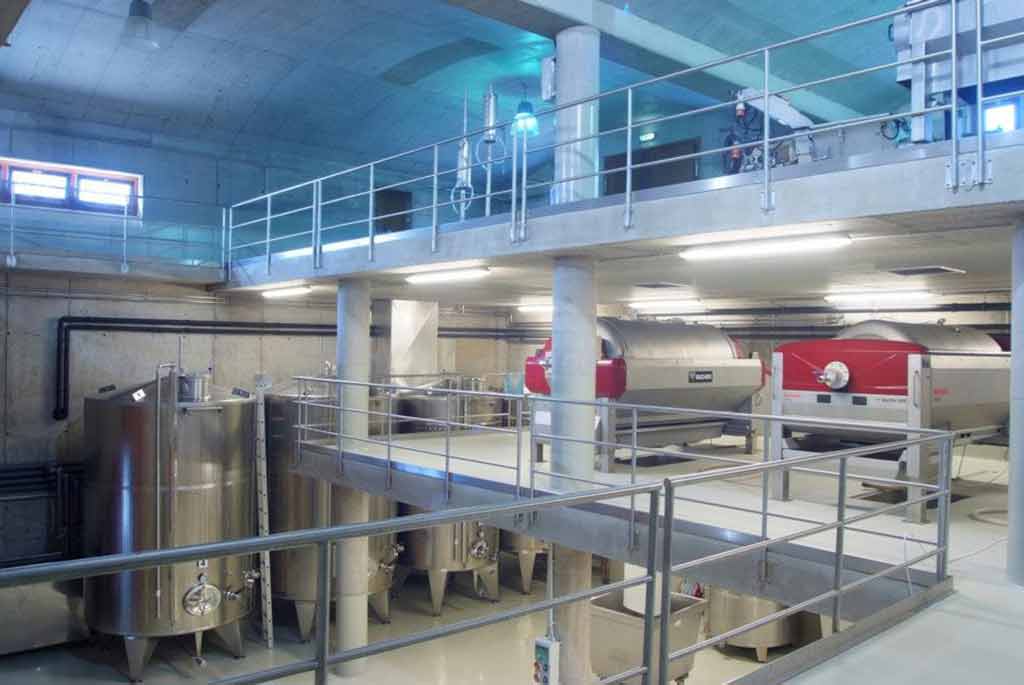
Architecture and Vibe: Located in the heart of Hungary, this winery is an ode to outward sobriety hiding a subterranean treasure. While the surface showcases impeccable limestone structures, a labyrinth of 13th-century tunnels unfolds below, covered in a “noble mold” that regulates humidity with magical precision.
The Oenotourism Experience: Here, one does not simply taste; one worships. The pinnacle experience is the sampling of the Essencia. It is served in a hand-blown crystal spoon, as it is so dense and precious that a glass would be an indulgence too far. The silence of the tasting room, interrupted only by the subtle clinking of crystal, creates an atmosphere of viticultural haute couture.
The Star Wine: Tokaji Aszú 6 Puttonyos. A sensory kaleidoscope: dried apricots, white flower honey, and an acidity that slices through the sweetness like a silver scalpel. It is the “Wine of Kings and King of Wines,” a phrase by Louis XIV that, after the first sip, feels like a redundant understatement.
The Wow Factor: The estate possesses a “security archive” where VIP clients can store their most prized vintages in niches carved into volcanic rock 700 years ago. Luna Global Travel holds access to one of these private caves for exclusive dinners among bottles that have survived two world wars.


- Château Purcari, Moldova: The Tsars’ Refuge
Architecture and Vibe: Nestled in the black earth of Moldova, Purcari is a French-style château that seems teleported to the heart of Eastern Europe. Its design is symmetrical, elegant, and emanates an air of landed aristocracy that makes you want to don white linen and read Pushkin under its pergolas.
The Oenotourism Experience: The visit includes access to the Historical Cellars of 1827. Walking through these corridors is feeling the pulse of an industry that once supplied Queen Victoria’s table. The aroma is a blend of old oak and the damp freshness of stone.
The Star Wine: Negru de Purcari. A bold blend of Cabernet Sauvignon, Saperavi, and Rara Neagră. In the glass, it shows a deep ruby color, almost black. Its notes of prune and saffron are the definition of sophistication. This is a wine that doesn’t ask for attention; it demands it.
The Wow Factor: The “Freedom Blend,” a wine created as a political statement by blending grapes from Georgia, Moldova, and Ukraine. It is a collector’s piece that Luna Global Travel presents as a pairing with stories of liberty and resilience.


- Meneghetti Wine Hotel & Winery, Croatia: Luxury in Terra Rossa
Architecture and Vibe: Imagine a villa of white Istrian stone surrounded by centennial olive trees and vineyards that kiss the Adriatic Sea. It is a vanguard design that respects rustic tradition—a perfect balance between a five-star boutique hotel and a high-performance winery.
The Oenotourism Experience: This is the epitome of “Vibrant.” Tastings on the terrace at sunset, with the sea breeze chilling the glasses of Malvazija. The service possesses Swiss precision but with Mediterranean warmth.
The Star Wine: Meneghetti Red. A blend of Merlot and Cabernet that absorbs the iron from the red soil (Terra Rossa). Notes of black truffle and forest floor that instantly awaken the taste buds.
The Wow Factor: The possibility of arriving at the winery via the property’s private yacht from Venice or Dubrovnik. Luna Global Travel coordinates this transfer so that your first contact with the wine is, quite literally, from the waters of the Adriatic.

An Epiphany on the Plate: Pairing and Local Gastronomy
Eating in this region under the tutelage of Luna Global Travel is a religious experience. Do not look for minimalist tasting menus; here, luxury is abundance and the purity of the product.
In Georgia, the pairing of Khachapuri Adjaruli (cheese-filled bread with an egg) with a skin-contact Qvevri white wine is a sin no one wants to confess. In Hungary, Foie Gras paired with a sweet Tokaj is not an appetizer; it is a communion of fatty textures and vibrant acidity that forces you to close your eyes.
The local gastronomy is the perfect counterpoint to the wines’ complexity: white Istrian truffles shaved over homemade pasta, Caucasian lamb slow-roasted with wild herbs, and Moldavian caviar that pops on the palate alongside a traditional method sparkling wine. It is honest cuisine, refined by centuries of hospitality that Luna Global Travel elevates to the category of private art.
VIP Survival Guide: The Art of Exclusivity
Traveling to these 12 countries is not for tourists; it is for high-level explorers. Here are some logistical tips for those seeking the unreachable:
- The Ally is Everything: In this region, the heaviest doors are not opened with money, but with relationships. Luna Global Travel acts as the cultural “turnkey,” guaranteeing access to wineries that are technically “not open to the public.”
- Transportation: Forget standard cars. The route is traveled in luxury SUVs with chauffeurs who know every curve of the Carpathians, or in private jets to leap from Georgian mountains to Croatian coasts in under two hours.
- Etiquette: The toast is sacred. Especially in Georgia, the “Tamada” (toastmaster) is the center of the table. Let Luna assign you a guide who is also an expert in local protocol.
- IMEX Madrid 2026: If you are at the fair, find the Luna stand. It is the only place where coffee is replaced by a vertical tasting of hidden gems.