The Awakening of Giants: A Cinematic Introduction
Dawn in the Douro Valley is not merely the start of a day; it is a choreography of light and shadow that seems to have been directed by a cinematographer obsessed with perfection. Picture this: the sun begins to lick the steep slopes, revealing schist terraces that climb the mountains like staircases to Olympus. The morning mist—that mystical nevoa that clings to the river like a lover reluctant to leave—begins to dissipate, leaving behind a scent that is the very essence of life: damp earth, wild rosemary, and the sweet perfume of rockrose flowers. There is no engine noise here, only the echo of a buzzard and the whisper of the wind through clusters of Touriga Nacional.
For the traveler who has seen it all—who has toasted in the hills of Tuscany and slept among the châteaux of Bordeaux—inland Portugal presents itself not as an alternative, but as the ultimate Mecca. Here, luxury is not measured in square meters of marble, but in the depth of a gaze from a viticulturist whose family has worked this stone for three centuries. It is the scent of the soil after the first autumn rain, that smell of graphite and slate that promises a glass of wine that is not just drunk, but felt in the bones.
This is not a destination for the hit-and-run tourist looking for a quick photo for their feed. It is the sanctuary of experts, of those who understand that true privilege is silence, the exclusivity of a winery closed to the general public, and the tasting of a Vintage Port that saw the light when the world was a different place. Welcome to the heart of Portugal, where time stands still and wine flows like liquid velvet, marking the rhythm of an existence that is, in itself, a work of art. If you seek the soul of Europe, you will find it here, bottled and ready to be uncorked.

The Soul of the Stone: Context and Terroir
If the Douro were a character in a novel, it would be an indomitable aristocrat—someone who has survived a thousand battles and emerged with an elegance that only suffering can bestow. The geography of inland Portugal is a constant challenge to logic. Here, the roots of the vines do not merely drink water; they must pierce meters of schist (esquisto), that laminar and rebellious stone, to find the moisture that keeps them alive under a sun that knows no mercy.
The climate is a drama of contrasts: “Nine months of winter and three of hell,” the locals say with that wry melancholy so typical of the Portuguese. But it is precisely this stress, this epic struggle of the plant against the elements, that grants the wines a concentration and minerality that are impossible to replicate anywhere else on the globe. We are not dealing with complacent grapes; we are dealing with warriors that transform the stifling heat of summer and the biting cold of the Marão mountains into pure elegance.
The local grape, led by Touriga Nacional, is the absolute protagonist. It possesses a thick skin, dark as a moonless night in Pinhão, and a heart that overflows with floral and fruit notes of overwhelming complexity. Alongside it, Touriga Franca and Tinta Roriz compose a tannic symphony that is the envy of the Old World. To understand the terroir of the Portuguese interior is to accept that nature is the true architect; man is only here to ensure that the message of the earth reaches the glass without interference. It is a “dialogue of stone,” a conversation between ancient soil and modern technique that has turned this region into the epicenter of avant-garde viticulture.


The Olympus of Wine: A Detailed Analysis of Emblematic Estates
- Quinta do Crasto: The Gaze of the Infinite
Architecture and Vibe: Arriving at Quinta do Crasto is like ascending to a throne. Situated in one of the most privileged locations in the Douro, this winery combines the solidity of a 17th-century manor house with the sophistication of an elite destination. But if one thing defines its “vibe,” it is the famous infinity pool designed by the Pritzker-winning architect Eduardo Souto de Moura. It is a space where the water seems to spill directly onto the vineyards, creating an illusion of continuity that suspends time. Here, the atmosphere is one of relaxed exclusivity; there are no pretensions, only the certainty of being in one of the most beautiful places in creation.
The Wine Tourism Experience: Forget group tastings in aseptic rooms. At Crasto, luxury begins with a private 4×4 tour through the vertical slopes, feeling the impossible incline of the terrain. The descent into the cellars is a sensory journey: the air becomes cool and humid, heavy with the scent of centuries. Upon entering their private tasting room, the sound of uncorking a bottle of Crasto Vinhas Velhas resonates with almost religious solemnity. The touch of the French oak barrels, softly brushed, is the prelude to an experience that involves all the senses.
The Star Wine: Crasto Maria Teresa. This wine is, quite literally, the soul of a specific plot of century-old vines. In a vertical tasting, Maria Teresa unfolds like a symphony. On the nose, it is an explosion of graphite, rockrose, and primary black fruits. On the palate, it is liquid velvet with a tannic structure so fine it seems woven by fairy hands. It is a wine that tastes like dawn in the mountains, with a lingering finish that evokes the pure minerality of the schist.
The Wow Factor: Crasto’s best-kept secret is the private dinner on the terrace under the stars. This is no ordinary dinner; it is a feast where each dish has been designed to harmonize with wines not found on the regular market, served while the Douro River shimmers in the absolute darkness far below.


- Quinta do Vallado: Where Design Meets Time
Architecture and Vibe: If Crasto is tradition elevated, Quinta do Vallado is the manifesto of modernity. Its winery is a masterpiece of contemporary architecture, clad in slabs of black schist that integrate it organically into the landscape. The design—minimalist and bold—plays with natural light and open spaces, creating a sensation of monastic calm but with a vibrant pulse. It is the kind of place where a collector of contemporary art would feel right at home.
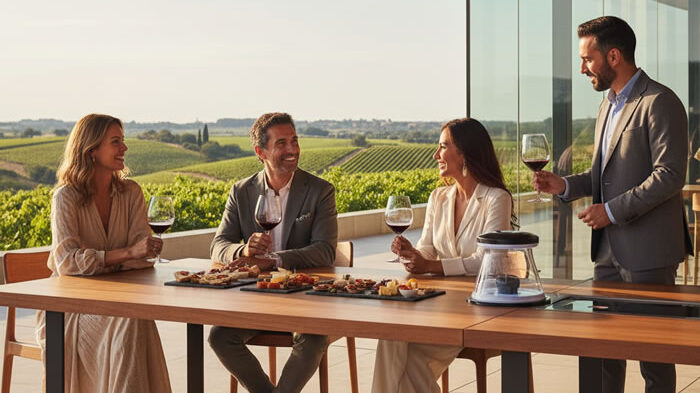
The Wine Tourism Experience: Walking through Vallado’s facilities is to understand the flow of wine. The tour of the underground cellars is a lesson in aesthetic engineering. The barrel rooms look like art galleries, where the silence is absolute. The experience culminates in a glass pavilion suspended over the valley, where the service is so impeccable it seems to anticipate your desires before you even formulate them.
The Star Wine: Vallado Adelaide Vintage Port. Tasting this Port is peering into the abyss of perfection. It is a wine of almost opaque chromatic intensity. On the nose, it offers notes of dried figs, dark chocolate, and a subtle hint of pipe tobacco. Upon tasting, the density is such that it seems to embrace the palate, leaving a trail of ripe red fruits and an acidic freshness that keeps it vibrant. It is, quite simply, the epitome of elegance bottled.
The Wow Factor: Vallado houses one of the most important wine libraries in the region, with specimens dating back to before the arrival of phylloxera. The “Wow Factor” is the possibility of participating in a component tasting, where you can taste directly from the barrel grapes from individual plots to understand how the final blend is constructed.


- Six Senses Douro Valley: The Sanctuary of Hedonistic Wellness
Architecture and Vibe: Housed in a meticulously restored 19th-century manor, this hotel and winery is the epicenter of holistic luxury. The architecture combines Belle Époque charm with modern interiors of organic inspiration. The atmosphere is one of absolute refinement; here, exclusivity is breathed in the scent of the aromatic herb gardens and in the soft lighting of its lounges.
The Wine Tourism Experience: Here, wine is not just drunk; it is lived. From spa treatments based on vinotherapy to workshops with the resident sommelier to create your own personalized blend. Imagine descending into the Wine Library, a private room surrounded by thousands of selected bottles, where the stone floor and wooden walls create perfect acoustics for listening to the history of each harvest.
The Star Wine: Special Reserve Selection. At Six Senses, the tasting focuses on limited editions from small local producers that they help promote. We are talking about whites with electric acidity and reds with “notes of graphite and sunrise”—wines that defy convention and seek the maximum purity of the fruit.
The Wow Factor: The “Alchemy Bar” and private sunset kayak trips down the river, followed by a tasting of fresh white wines aboard a vintage teak wooden boat. This is luxury in its purest, most playful expression.

An Epiphany for the Palate: Local Pairing and Gastronomy
The gastronomy of inland Portugal is not for those who count calories; it is for those who seek salvation. It is a cuisine of resistance—honest and brutally delicious. For your experience to be truly religious, you must surrender to the Leitão (suckling pig), whose crispy skin is a sin worth committing, paired with a local sparkling wine made from the Gouveio grape to cleanse the palate with its fine bubbles.
You cannot leave without trying Queijo da Serra, a sheep’s cheese with a texture so creamy it must be eaten with a spoon, accompanied by a 20-year-old Tawny Port. The combination of the cheese’s saltiness with the wine’s nutty notes will create a harmony in your mouth that can only be described as a celestial choir. And for game dishes, wild boar stews cry out for a full-bodied red, with those notes of leather and spices that only time in the barrel can bestow. Eating here is a communion with the land; every bite tells the story of a people who know that life is celebrated around a well-served table.
VIP Survival Guide: The Protocol of Exclusivity
For the expert traveler seeking to navigate this region with distinction, logistics are key. Forget tourist buses; inland Portugal is conquered by air or by water.
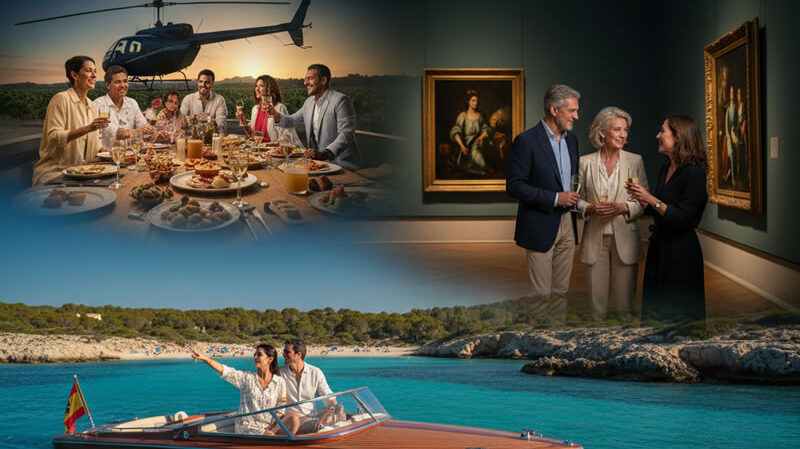
- Arrive with Style: Hire a private helicopter from Porto (OPO). The 25-minute flight over the vineyards is, in itself, a breathtaking experience that will save you from the winding curves of the mountain roads.
- Local Transport: A private chauffeur in a luxury SUV is indispensable. The Douro roads are beautiful but treacherous for those who don’t know them.
- The River is the Path: Rent a private wooden yacht to move between wineries. It is the only way to appreciate the magnitude of the terraces without interference.
- Elite Reservations: At the aforementioned wineries, do not attempt to book through standard platforms. Direct contact or a specialized concierge is necessary to access private cellars and library vintages that do not appear on the menu.
Inland Portugal is not asking you to visit; it is inviting you to lose yourself in it. It is the last refuge of European authenticity wrapped in a package of unapologetic luxury. Pack your bags, leave room for some impossible-to-find bottles, and prepare for your travel standards to change forever.