I. A Prelude of Mist and Glassware: Dawn in the Interior
It is not the Douro, with its geometry of terraces that look like stairways to heaven, nor is it the Alentejo with its infinite horizontality tinged with cork. Beira Baixa is something else entirely. It is a secret whispered between mountains of granite and schist—a corner of Portugal where time does not simply pass; it matures.
It is 6:45 AM. I find myself on the balcony of a century-old quinta, watching the mist perezosamente (lazily) unravel from the slopes of the Serra da Gardunha. The air here has a specific gravity: it smells of rockrose, damp pine, and that almost electric mineral aroma that emanates from granite soil after a night of rain. It is the scent of petrichor mingled with the promise of a late harvest.
For the traveler who has traversed the globe in search of the perfect “terroir,” Beira Baixa is the final frontier. Here, luxury does not reside in the gilded marble of chain hotels, but in the exclusivity of being the only human soul in a vineyard of ancient vines that have witnessed revolutions and border treaties. Opening a bottle here is not merely a social act; it is a communion with the silence of the “Beira Interior.”
As the sun begins to lick the clusters of Rufete, the crystal of my Zalto glass catches the first ray of light, transforming a white Síria into liquid gold. If wine is the language of the earth, Beira Baixa is about to recite an epic poem to us. Welcome to the cradle of the new Portuguese classicism.

II. The Character of Silence: Terroir, Climate, and the Rebellion of the Grape
To understand what we drink here, one must understand that Beira Baixa is a land of brutal contrasts. It is not a place for lukewarm spirits. Geographically, we are in the heart of deep Portugal, flanked by the majestic Serra da Estrela and the Spanish border. It is an amphitheater of stone where the climate plays at extremes: winters that force you to seek refuge by the lareira (fireplace) and summers where the sun is an implacable judge.
The soil is the true protagonist. Imagine a mixture of decomposed granite and veins of schist. This geology is not just a datum for geologists; it is the backbone of the wine. Granite provides a vibrant acidity and a verticality that makes the wine “dance” on the tongue, while schist grants that tannic structure and depth that allows reds to age with the dignity of an aristocrat.
And then, there is her. If Beira Baixa were a novel, the Rufete grape would be the enigmatic protagonist, the femme fatale of the vineyard. It is a temperamental variety, difficult to cultivate, which in inexpert hands can be rustic, but under the direction of the region’s new masters, it becomes something sublime. It is the “Pinot Noir of the South”: elegant, pale ruby in color, with notes of wild berries, spices, and a mineral finish that forces you to close your eyes.
Alongside it, Síria and Fonte Cal in the whites offer a freshness that seems impossible at these latitudes, with an aging capacity that challenges the great Burgundies. Here, wine is not “made”; it is extracted from the stone.


III. The Cathedrals of Taste: A Journey Through Excellence
- Adega 23: Steel Avant-Garde Among Millenary Olives
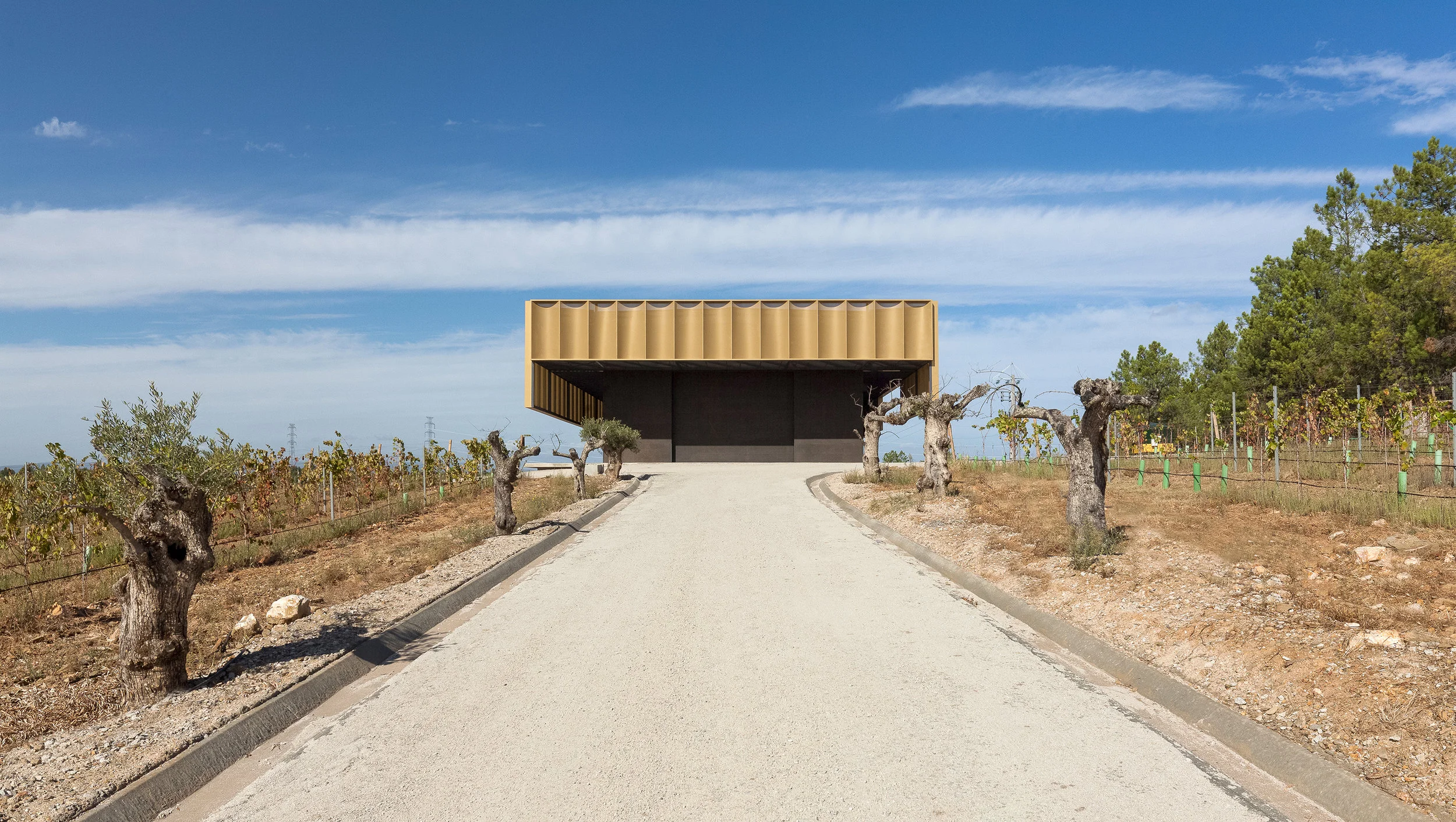
Architecture and Vibe: Arriving at Adega 23 in Sarnadas de Ródão is like finding a miniature Guggenheim in the middle of a biblical landscape. The building, designed with a sophisticated industrial aesthetic, is an ode to minimalism: dark metal lines that contrast with the silver-green of the olive trees. It is a “boutique winery” that breathes modernity, owned by a visionary, Dr. Manuela Carmona, who decided to trade medicine for the vineyard.
The Wine Tourism Experience: Forget noisy group tastings. Here, the premium experience begins with a private stroll through the vineyards at sunset, where the wind rising from the Tagus River caresses the leaves. The descent into the barrel room is a sensory journey; the air becomes cool and heavy with aromas of vanilla and fine toast. The tasting takes place at a designer table, where the silence is only broken by the crystalline pop of the cork and the passionate explanation of fermentation in cement eggs and French oak barrels.
The Star Wine: Adega 23 Reserva Blanco. This is a bold blend that defies convention. On the nose, it is an explosion of white flowers and stone fruit, but the palate is where the magic happens: a creamy texture, almost like liquid velvet, balanced by a citrus acidity that pierces the palate like a ray of light. It is a wine that tastes of freedom.
The Wow Factor: The suspended terrace. At the end of the tasting, you are led to a platform that seems to float over the valley. Sipping their Syrah while the sun sets behind the Portas de Ródão (a monumental geological formation of the Tagus) is an experience that borders on the mystical. It is not just drinking; it is witnessing the magnitude of nature with a 95-point glass in hand.


- Quinta dos Termos: The Legacy of Wisdom
Architecture and Vibe: If Adega 23 is the future, Quinta dos Termos is the eternal soul of Beira Baixa. Located in Belmonte, this property emanates a rustic, stately elegance. Do not look for design gimmicks here; look for the solidity of granite and the warmth of a family that treats every vine like a child. It is a winery that feels like a private club for connoisseurs.
The Wine Tourism Experience: This is arguably the finest lesson in viticulture on the peninsula. Premium access includes a tour of their “experimental fields,” where they recover almost extinct varieties. Entering their Biblioteca do Vinho (Wine Library) is a privilege reserved for the few: a room surrounded by historical bottles where time seems to have stood still. Here, the touch of the barrels is not just wood; it is the record of decades of history.
The Star Wine: Quinta dos Termos Rufete “Reserva Especial.” This wine is the reason international critics are turning their eyes toward this region. It is pure silk. Notes of graphite, wet earth, wild raspberry, and a hint of white pepper. It is an intellectual wine that evolves in the glass every five minutes, revealing new layers of complexity.
The Wow Factor: The “Tunnel of the Senses.” An area of the winery where the lighting and acoustics are designed to enhance olfactory perception. But the true secret is their private collection of pure varietals that never hit the market, and which only upon request—and with the guidance of the house sommelier—might you get to taste. It is the Holy Grail for wine geeks.


- Quinta da Biaia: The Roof of the Beira
Architecture and Vibe: Located in Castelo Rodrigo, at an altitude that challenges the limits of traditional viticulture, Quinta da Biaia is an ode to organic purity. The architecture is a masterful rehabilitation of old stone buildings, perfectly integrated into the rugged landscape. The atmosphere is one of absolute serenity; here, luxury is the pure air and the absence of noise pollution.
The Wine Tourism Experience: This is an immersion in high-altitude viticulture. The VIP experience includes a 4×4 tour of the highest plots (up to 750 meters), where the vines struggle against the wind and the rock. The tasting is held in a room with panoramic views that stretch all the way to the Spanish border, pairing their wines with artisanal cheeses produced exclusively for the family.
The Star Wine: Biaia Síria “Vinhas Velhas.” A white wine that breaks all the rules. It is electric, vibrant, with a minerality reminiscent of the best Rieslings from the Mosel, but with the body and structure of a great Chardonnay. It tastes of green apples, lime, and mountain sun.
The Wow Factor: The possibility of participating in a “Starry Tasting.” Due to the zero light pollution, they organize private dinners among the vineyards where an astronomer explains the constellations while you enjoy a vertical tasting of their best reds. Drinking a Rufete under the Milky Way is an experience that redefines the concept of exclusivity.

IV. Alchemy on the Plate: Gastronomy that Elevates the Spirit
The cuisine of Beira Baixa is an ode to resilience and honest flavor. One does not come here for meaningless foams, but to rediscover the product in its most glorious state.
To make the experience truly religious, one must start with Queijo de Castelo Branco (DOP). It is a sheep’s milk cheese, semi-hard or buttery in texture, with an intense aroma and a subtle spice that demands a full-bodied white wine. It is the perfect prelude.
The star dish, the one that separates tourists from travelers, is the Maranho. It is a traditional sausage made of goat meat, rice, and mint, cooked with a mastery that makes it light and aromatic. Pairing it with a Rufete red from Quinta dos Termos is to reach gastronomic nirvana: the wine’s acidity cuts through the meat’s richness, while the mint in the dish highlights the varietal’s herbal notes.
And we cannot forget the Beira Baixa Olive Oil. It is liquid gold. With almost non-existent acidity and notes of bitter almond, it is the common thread of the entire meal. A piece of artisanal rye bread, a drizzle of this oil, and a glass of wine is, quite possibly, the best meal money (and good taste) can buy.
V. VIP Survival Guide: Logistics for the Hedonist
For those looking to traverse Beira Baixa without sacrificing an ounce of comfort, planning is key.
- When to go: Spring (May-June) is a spectacle of wildflowers. September is the harvest month, ideal for those who want to feel the real pulse of the winery.
- How to get around: Forget renting a standard car. The best way to enjoy it is to hire a Private Driver/Sommelier. The roads are winding and the tastings are generous; the safety and comfort of a climate-controlled Range Rover is non-negotiable.
- Where to stay: Casas do Côro (in Marialva) is the crown jewel. It is not just a hotel; it is a masterfully rehabilitated historical village with an exquisite spa and one of the best private wine cellars in the country.
- Expert Tip: Do not try to see ten wineries in three days. Choose three, invest time in private visits, and speak with the winemakers. In Beira Baixa, haste is the greatest enemy of pleasure.
Beira Baixa is not visited; it is absorbed. It is a destination for the traveler who has seen it all and now seeks only the truth in a crystal glass. It is the luxury of the authentic—the triumph of granite over modern haste.