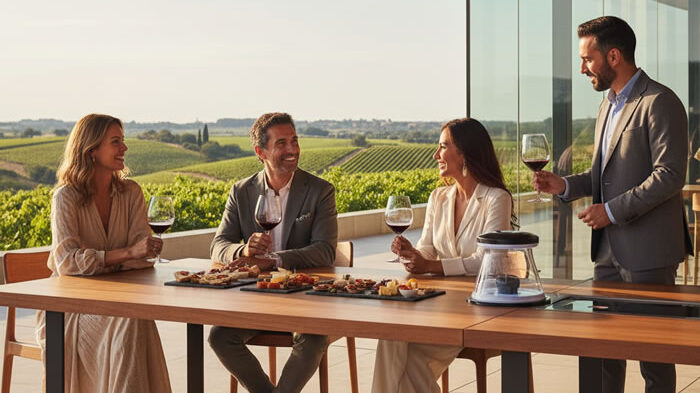
The Awakening of the Atlantic: A Prologue of Mist and Crystal
It isn’t the sun that wakes you in the Salnés Valley; it is the damp caress of a mist that refuses to leave—a lazy fog that ascends from the Ría de Arousa to embrace the vines like a lover who cannot say goodbye. Picture the scene: it is seven in the morning, and the air is an intoxicating blend of eucalyptus, wild fennel, and that metallic, almost electric perfume that only the Atlantic can exhale when it crashes against the granite rocks. Here, in the northwest of Spain, green is not just a color; it is an obsession. A green so deep and varied it makes tropical jungles seem monochromatic.
Close your eyes. Listen to the rhythmic drip of dew falling from the stone parrales (pergolas) onto a soil that has been filtering Celtic legends for millennia. We are not standing before a conventional vineyard of low, French-style rows; we are beneath a canopy of Albariño leaves—an architecture of granite pillars that lifts the fruit toward the sky, distancing it from the ground’s humidity and allowing the sea breeze to circulate among the clusters like an invisible sommelier overseeing the ripening process.
If you have come looking for the powerful, dusty reds of the central plateau, you have brought the wrong compass. Rías Baixas is the “Mecca” of absolute freshness. It is the place where wine is not merely drunk; it is breathed. Every glass of Albariño is a time capsule containing an ocean storm, the vibrant acidity of a freshly bitten green apple, and the austere elegance of a stone pazo (manor house). This route is not a simple enotourism itinerary; it is a pilgrimage toward purity. It is the promise that, after the first sip, your palate will never again settle for the ordinary. Here, the wine has a soul, it has salt, and above all, it has a truth that only reveals itself to those willing to get their shoes a bit muddy in the sacred soil of Galicia.

The Grape Born of a Wave: Terroir and the Albariño Persona
To understand Rías Baixas, one must understand that here, the soil is not earth; it is a skeleton. Granite is the absolute protagonist of this geological novel. We are talking about an ancient, acidic, and poor mother rock that forces the vine’s roots to suffer, to twist, and to seek life in the deepest crevices. That “suffering” is what grants the wine its piercing minerality—that sensation of licking a wet stone that we experts call, with a certain poetic arrogance, nerve.
The climate is the necessary antagonist. The Atlantic, with its temperamental storms and constant humidity, dictates the rules. While in other regions the sun is the architect of sugar, here the rain is the guardian of acidity. But make no mistake: Albariño is not a fragile grape. It is an aristocrat of iron. It is a variety that has learned to metabolize light filtered through clouds to create an aromatic palette of insulting complexity: white flowers, vineyard peach, pungent citrus, and always present, the memory of the sea.
If Albariño were a fictional character, she would be a Jane Austen heroine who has spent far too much time on a fishing boat: elegant, sophisticated, and possessed of impeccable manners, yet with calloused hands and a gaze that knows how to read a storm. It is this duality—the finesse of crystal and the strength of granite—that makes the Salnés subzone the global epicenter for world-class age-worthy whites. Yes, you read that correctly: age-worthy. Because the great secret the wine elite has jealously guarded is that a great Albariño does not just survive time; it tames it, transforming its youthful freshness into an unctuous, petrol-noted complexity that rivals the best Rieslings from the Mosel or Chardonnays from Burgundy.


The Triumvirate of Luxury: The Cathedrals of Albariño
- Palacio de Fefiñanes: The Aristocrat of Time
Entering the Plaza de Fefiñanes in Cambados is like stepping through a temporal portal into the 16th century. It is not just a winery; it is the civic heart of the Albariño capital. Here, the granite stone doesn’t just support the walls; it seems to exude history itself.
Architecture and Vibe: The Palace is a jewel of the Spanish Renaissance, featuring a circular balcony, an arched bridge, and an imposing tower. There is no trace of the coldness of modern stainless steel in sight. The atmosphere is one of silent nobility. Walking through its halls, you feel the weight of centuries beneath your riding boots. It is a winery that doesn’t need to shout its importance because it knows it was the first to label and market Albariño back in 1928. The vibe is one of “old money” elegance that would make an English Lord feel like an interloper.
The Enotourism Experience: Forget group tours with guides reciting scripts. At Fefiñanes, luxury is silence. The premium experience begins with private access to the walled vineyards—secret gardens where centenarian vines look like living sculptures. The descent into the cellar is a journey into shadows. The air is cold, smelling of old wood and noble humidity. There, beneath chestnut beams, the secrets of the wine are whispered. The tasting takes place at a solid oak table, surrounded by portraits of ancestors who seem to be judging whether your palate is worthy of their bottles.
The Star Wine: Albariño de Fefiñanes III Año This wine is a reality check for those who believe white wine must be consumed within the year. The “III Año” spends, as its name suggests, three years in contact with its lees (the yeast cells that provide creaminess). In the glass, it is liquid gold with flashes of platinum. The first impact on the nose is an explosion of ripe, almost candied fruit, but immediately the Fefiñanes character emerges: a citrus acidity that cuts like a silver scalpel and a saline finish that forces you to close your eyes. It is velvet with thorns. A wine that does not merely accompany food but engages in an intellectual dialogue with it.
The Wow Factor: The historical archive. They possess a collection of labels and correspondence dating back to the early 20th century. However, the true “wow” is the private tunnel connecting the palace to the Church of San Benito. It is said the nobles could attend Mass without getting wet in the Galician rain, though I prefer to imagine it was the secret path for the parish priest to fetch a bottle of the best vintage.


II. Pazo de Señorans: The Art of Patience
If Fefiñanes is history, Pazo de Señorans is technical excellence elevated to the category of poetry. Located in Vilanoviña, this 16th-century pazo is the standard-bearer for what happens when a visionary woman, Marisol Bueno, decides her wine should be eternal.
Architecture and Vibe: It is the quintessence of seigniorial Galicia. A walled enclosure with hórreos (traditional granaries), chapels, and a camellia garden that looks like it was designed for a period film. Yet, behind the stone façade hides one of the most technologically advanced wineries in the world. The vibe here is absolute serenity. It is a place where time seems to have stopped—not for lack of movement, but out of a reverential respect for the rhythm of nature.
The Enotourism Experience: The VIP experience at Señorans is a masterclass in viticulture. Walking through their 18-hectare pergola system with a guide who explains how every cluster is hand-selected is to understand the value of craftsmanship. The highlight is the visit to the stainless steel tank room, where the wine rests on its lees for years. The sound of a cork popping here is different; it isn’t an explosion, but a sigh of relief from a wine that has waited for the perfect moment to meet you.
The Star Wine: Selección de Añada We are talking about, quite possibly, the best white wine in Spain. I accept no arguments on this matter. The “Selección de Añada” hits the market after nearly a decade of aging. It is an Albariño that has lost its youthful shyness to become a sage. Notes of kerosene, bitter orange peel, dried flowers, and a texture on the palate that I can only describe as “sea butter.” It is dense, profound, and almost eternal in its aftertaste. Drinking a 2013 bottle in 2026 is a religious experience that redefines your concept of the grape.
The Wow Factor: The copper stills. Señorans produces some of the finest spirits (aguardientes) in Galicia. The “Wow Factor” is entering the distillation room at sunset, when the copper glows with an orange fire and the aroma of pomace fills the air. It is an alchemical scene that makes you feel you are witnessing the creation of the elixir of life.

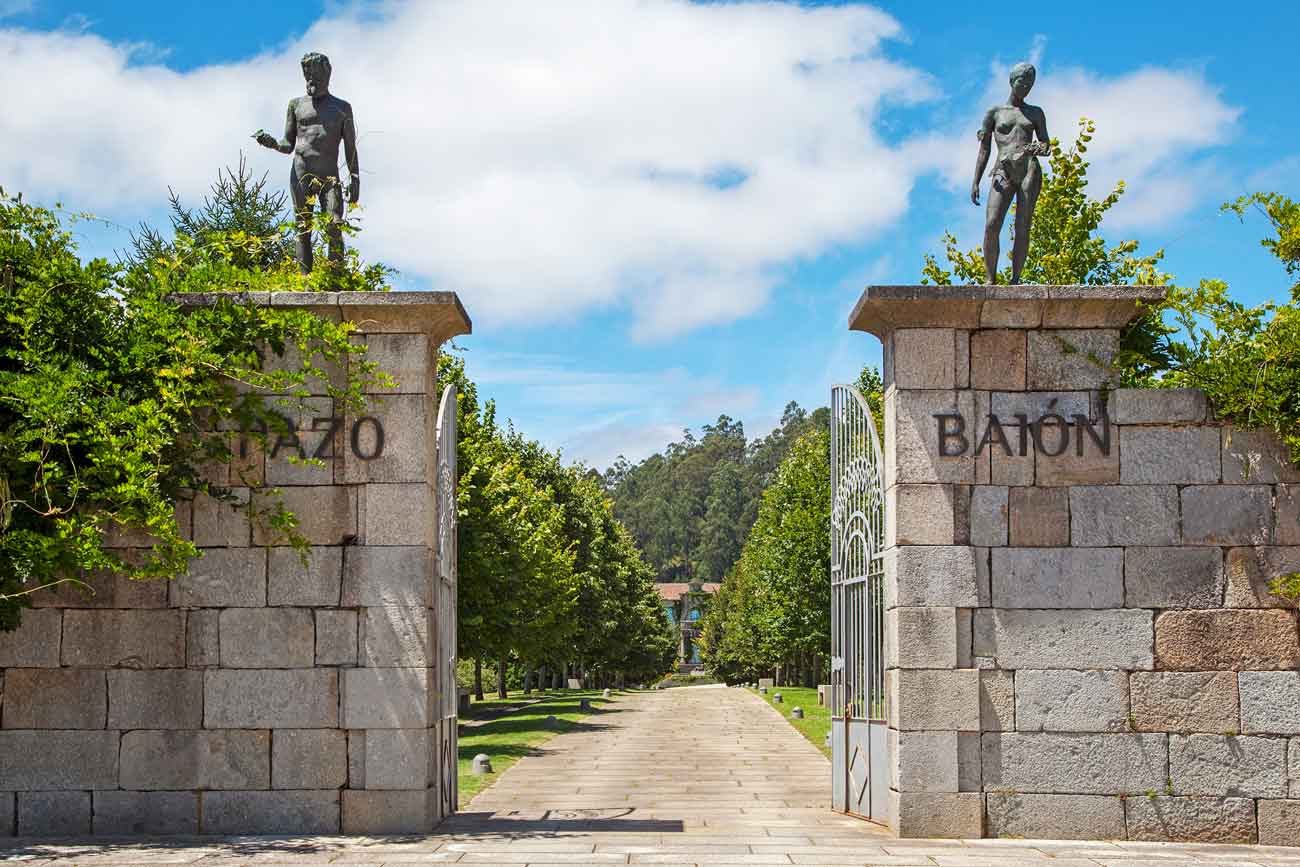


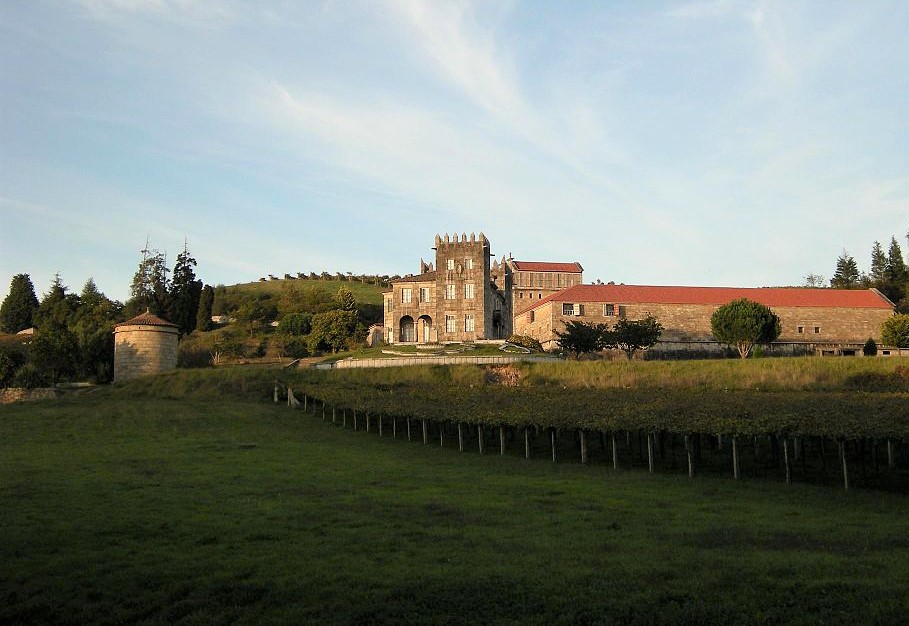

III. Pazo Baión: The Redemption of the Landscape
To close this golden triangle, we must visit Pazo Baión. If this place were a movie, it would be a Martin Scorsese film that ends up becoming a Terrence Malick masterpiece. With a dark past linked to the drug trade of the 80s, today it is the symbol of modern, elegant Galicia, rehabilitated by the Condes de Albarei cooperative.
Architecture and Vibe: It is a visual spectacle. The architectural restoration is masterful: the original stone lives alongside immense glass panes and minimalist designs. It feels like a Bordeaux Château transplanted to the Galician hills. The vibe is one of modern opulence, light, and avant-garde style.
The Enotourism Experience: They offer one of the most exclusive experiences in the region: the “Tour of the Senses.” It includes a tour in an electric vehicle through the 30 hectares of the estate, where each plot produces a different micro-climate. Ending the visit in their suspended tasting room, with panoramic views of the valley while tasting a “Vino de Pago” (single estate wine), is the epitome of contemporary luxury.
The Star Wine: Pazo Baión “Gran a Gran” A late-harvest wine that defies the laws of botrytis in a humid climate. It is a sweet wine, but with an acidity so vibrant it never feels cloying. Notes of heather honey, dried apricot, and a minerality that anchors you to the ground. It is, essentially, a liquid dessert for people who hate sugar.
The Wow Factor: The winery is the only one in Rías Baixas with the “Vino de Pago” classification (the Spanish equivalent of a Grand Cru). The wow factor is its centenarian dovecote, converted into an ultra-private tasting space where only the most exclusive clients can enter to toast to the redemption of the land.

The Feast of the Gods: Pairing in the Land of the Sea
In Rías Baixas, eating is not a physiological necessity; it is an act of worship. Forget diets; here, cholesterol is a myth and shellfish is the only currency that matters.
Pairing a Pazo de Señorans Albariño with percebes (goose barnacles) freshly plucked from the rocks of the Costa da Morte is an experience that should be on every human being’s bucket list. The salinity of the wine seeks out the iodized intensity of the crustacean in an embrace that tastes of the pure ocean.
If you prefer something more sophisticated, seek out the wild Turbot a la gallega (with its garlic and pimentón oil). The fish’s infiltrated fat requires the sharp acidity of a Fefiñanes to cleanse the palate with every bite. And for those seeking gastronomic nirvana, try the Zamburiñas (variegated scallops) grilled over embers with a glass of Pazo Baión. The smoky touch of the fire and the sweetness of the mollusk create a symphony that would make an angel weep.
Do not overlook pairings with Galician cheeses like Cebreiro or a smoked San Simón da Costa. The creaminess of the cheese and the freshness of the wine are the perfect definition of balance. In Galicia, the product is king, and the chef is merely the servant ensuring it isn’t spoiled.
VIP Survival Guide: The Logistics of Exclusivity
Visiting Rías Baixas as an initiate requires more than a GPS; it requires style and foresight. Here are my golden tips:
- Transport: Do not drive. The roads between vineyards are narrow and treacherous, and you will want to drink. Hire a private chauffeur with a Mercedes S-Class. Even better, charter a private yacht in the port of Vilagarcía to reach wineries with coastal access. There is nothing more “pro” than disembarking with a glass of chilled white in hand.
- Accommodation: The Parador de Cambados is a classic, but for real exclusivity, book a suite at a luxury rural estate like A Quinta da Auga (near Santiago) or seek out private pazos that open their doors only upon recommendation.
- Timing: Avoid August. Luxury hates crowds. Go in September, during the harvest, to smell the fresh must in the air, or in May, when the camellias are at their peak and the green of the vineyards is almost painful to the eyes.
- Luggage: High-quality leather boots (Galician mud is unforgiving), a Barbour jacket for the morning mist, and an empty suitcase. I assure you, you will want to bring back cases of bottles that you won’t find anywhere else in the world.
Rías Baixas is the soul of the Atlantic bottled. It is a place where luxury is not gold, but time, stone, and that indescribable feeling of happiness found only when the sea wind hits your face and you have a glass of perfect Albariño in your hand.