The Awakening of the Senses: A Cinematic Introduction
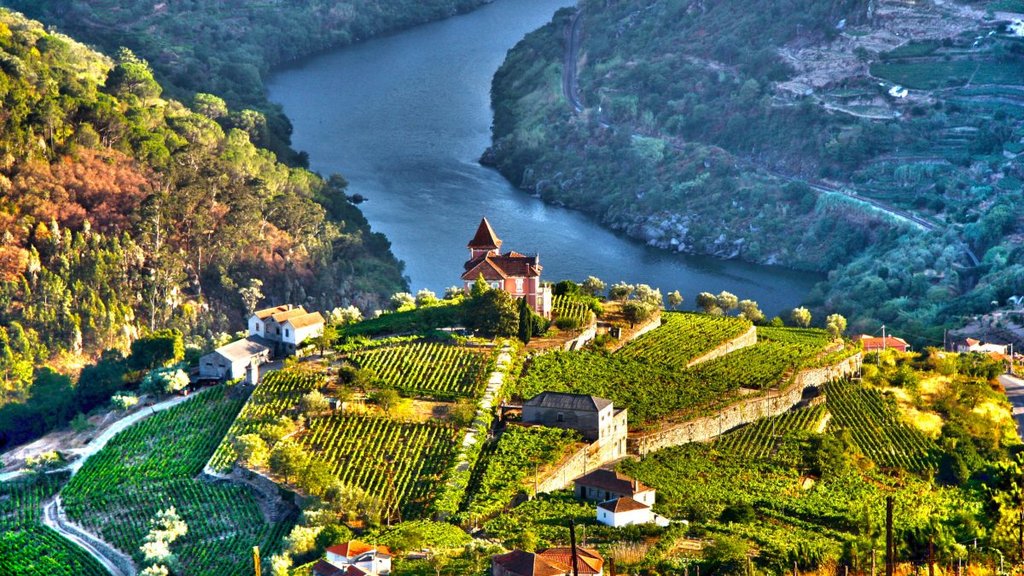
Imagine the world falling silent, save for the almost imperceptible whisper of the Douro River carving its way through schist canyons. It is the blue hour in northern Portugal. The mist—that mystical nevoeiro that local poets swear possesses a soul—glides lazily over the terraced slopes, caressing the gnarled vines that seem to cling to the rock with heroic desperation. The air smells of something money cannot buy, but luxury knows how to bottle: a heady blend of damp earth, wild rockrose, rosemary, and the sweet echo of grapes ripening under a sun that is unforgiving yet celebratory.
We are not merely in a wine region; we are in the world’s largest and most dramatic natural amphitheater. Here, luxury is not measured by the thread count of the sheets—though I assure you, they are sublime—but by the ability to stop time. Portugal has ceased being Europe’s best-kept secret to become its most sophisticated destination. A miracle has occurred: the renaissance of the rural. Old quintas, once bastions of an austere agricultural aristocracy, have been transformed into avant-garde sanctuaries where minimalist design holds a dialogue with 18th-century stone walls.
This is the “Mecca” because here, wine is not produced; it is extracted from the sacrifice of the land. Drinking a Vintage Port or a structured Alentejo red against these landscapes is a religious experience for the palate. It is the encounter between centuries of heritage and the audacity of a new generation of winemakers who have decided that luxury is, above all, authenticity. Prepare yourself, for crossing the gates of these estates is not merely going on holiday; it is beginning a romance with the eternal. Let us uncork this journey.

The Protagonist: Terroir, Schist, and the Soul of the Grape
To understand Portugal, one must understand that its soil is a character from a Greek tragedy: long-suffering, harsh, and profoundly complex. If the Douro were a man, he would be a weathered sailor with calloused hands and a gaze that has seen a thousand storms; if the Alentejo were a woman, she would be a solar queen—vast, warm, and possessed of a silent elegance.
The Douro: The Victory of Schist
The geography of the Douro is a challenge to logic. The schist (xisto) soil is a metamorphic rock that laminates vertically, allowing the vine roots to penetrate up to 20 meters deep in search of a moisture that the surface denies them. It is a terroir of survival. The climate is a “hell” of extremes: nove meses de inverno e três de inferno (nine months of winter and three of hell), as the locals say. But it is precisely this thermal stress that concentrates the sugars and polyphenolic structure, creating wines with an iron backbone and a velvet heart.
The Touriga Nacional grape is our leading lady. She is the prima donna of the Portuguese vineyard. Small-berried and thick-skinned, she offers an almost opaque intensity of color and an aromatic complexity that dances between violet, bergamot, and black forest fruits. But she does not travel alone; she is accompanied by Touriga Franca, which brings elegance and floral notes, and Tinta Roriz, which adds that tannic structure allowing wines to age with the dignity of a cathedral.
The Alentejo: The Sun’s Embrace
Heading south, the landscape shifts from dramatic verticality to infinite horizontality. Here, the soil is a mosaic of granite, slate, and marble. The Mediterranean climate, influenced by continental air, grants the wines a generous ripeness. In the Alentejo, the grape is pure hedonism. These are wines that speak of heat, sweet spices, and a smoothness that envelops the palate like a silk stole. Here, luxury is space. Luxury is a silence broken only by the chirping of cicadas.


Temples of Wine: A Detailed Analysis of Emblematic Estates
I have selected four properties that are not just wineries; they are manifestos on what rural luxury means today.
- Quinta do Crasto: The Vertigo of Perfection (Douro)
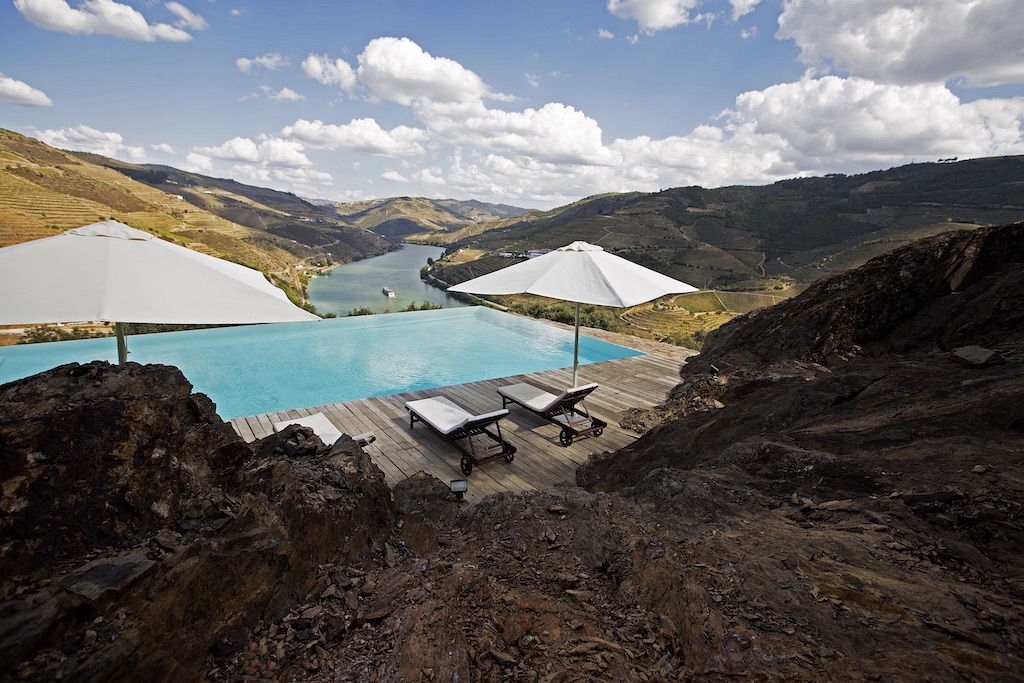
Architecture and Vibe Arriving at Quinta do Crasto is an exercise in faith. The road snakes up the hillside with an audacity that takes your breath away until, suddenly, she appears: a manor house painted an immaculate white, dominating the valley from a privileged ridge. The vibe is one of relaxed exclusivity. There are no unnecessary flourishes; there is living history. Its famous infinity pool, designed by Pritzker Prize winner Eduardo Souto de Moura, seems to merge with the Douro waters hundreds of meters below. It is, arguably, the most photogenic place on Earth to hold a glass of wine.
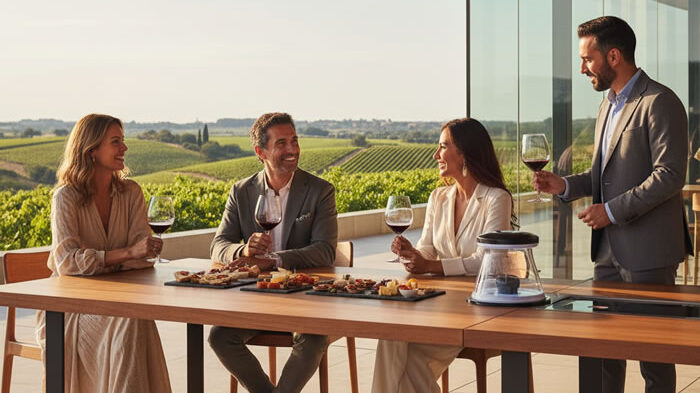
The Wine Tourism Experience Luxury here is private. Forget mass tours. The premium experience begins with a walk through the “Vinhas Velhas” (Old Vines), some over 100 years old, where up to 30 different grape varieties mingle in harmonious chaos. The descent into the cellar is a sensory journey: the air turns cool and damp, heavy with the scent of evaporating wine—the “angel’s share.” The tasting takes place at a solid wood table in their private barrel room, where the sound of the pipette extracting wine directly from French oak sounds like a cello chord.
The Star Wine: Quinta do Crasto Vinhas Velhas Reserva This is a wine that is pure liquid geology. In a vertical tasting, its color is deep garnet with purple hues. The nose is an explosion of Mediterranean scrub, notes of graphite, and a hint of raw cocoa. Upon tasting, the attack is powerful, yet the tannins are so fine they feel like diamond dust. It is a wine with “grip,” boasting a vibrant acidity that bodes for an eternal life. It is liquid velvet with a finish that evokes the smoke of a distant fireplace.
The Wow Factor A private dinner under the stars by the Souto de Moura pool. The service is so discreet it feels invisible, as you are served Douro specialties paired with vintages no longer found on the market. It is the feeling of owning the mountain for a night.


- Quinta do Vallado: The Manifesto of Modern Design (Douro)
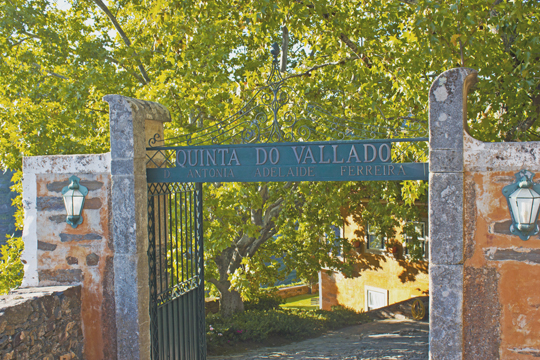
Architecture and Vibe Quinta do Vallado is the perfect example of how the past can embrace the future without losing its soul. Owned by the descendants of the legendary Dona Antónia Adelaide Ferreira, the original 1716 winery coexists with a stunning architectural expansion clad in black schist slabs. It is a minimalist design bunker that seems to emerge from the earth itself. The atmosphere is chic, intellectual, and deeply avant-garde.
The Wine Tourism Experience Here, technology serves art. The tour of the gravity-fed winery is a lesson in aesthetic engineering. The premium experience includes a 4×4 tour of the estate’s most remote plots, culminating in a luxury picnic amidst the vines, featuring linen tablecloths and silver cutlery. It is the ultimate contrast: extreme sophistication in the most rustic setting imaginable.
The Star Wine: Vallado Adelaide Tributo This wine is a tribute, a jewel produced only in exceptional years. It is a Field Blend of old vines that offers an almost overwhelming complexity. In the glass, it presents a density that stains the crystal. Notes of frankincense, sandalwood, and candied red fruits. On the palate, it is a symphony: it has the build of a warrior and the elegance of an ambassador. It is a wine you do not merely drink; you meditate upon it.
The Wow Factor The design hotel. Sleeping in one of the rooms in the “New Wing,” built entirely of schist, where the window is a giant frame enclosing the vineyard like a Monet painting that shifts with the daylight.


- L’AND Vineyards: The Alentejo Galaxy (Alentejo)
Architecture and Vibe If the Douro is history, L’AND Vineyards is cosmology. Located near Montemor-o-Novo, this complex is a masterpiece of contemporary architecture. Designed with a concept by Peter Zumthor and developed by local talents, it uses natural stone, wood, and raw concrete to create a spiritual retreat. The vibe is “quiet luxury.” Everything is sober, spacious, and bathed in the blinding Alentejo light.
The Wine Tourism Experience Here, wine is lived from a holistic perspective. The Caudalie Vinotherapy spa is the perfect prelude to the tasting. The crowning experience is crafting your own private “blend” under the supervision of the house oenologist. You sit in a designer laboratory, testing different varieties (Alicante Bouschet, Touriga Nacional, Syrah) until you find your perfect balance. It is pure alchemy.
The Star Wine: L’AND Reserva A red that captures the essence of the modern Alentejo. It is solar and warm, with notes of black plum, pepper, and a balsamic touch that lends freshness. The tannins are round, almost sweet, the product of perfect ripening under the southern sun. It is a wine that embraces you.
The Wow Factor The “Sky Suites.” Rooms where the ceiling completely retracts via an electronic system, allowing you to sleep literally under the Alentejo starlight—one of the clearest skies in Europe due to the lack of light pollution. Sipping a glass of wine while identifying the Milky Way from your bed is, quite simply, unsurpassed.


- Herdade do Esporão: The Cathedral of the Earth (Alentejo)
Architecture and Vibe Esporão is an institution. Entering its Reguengos de Monsaraz estate is like entering a state within a state. Its iconic medieval tower dominates the horizon, surrounded by a sea of vineyards and olive trees. The architecture blends traditional white houses with a state-of-the-art underground cellar and a visitor center that is an ode to Portuguese good taste. The vibe is one of organic and sustainable opulence.
The Wine Tourism Experience Exclusivity here manifests as access to the “Reserve Tunnels.” A descent into the depths where thousands of bottles rest in sepulchral silence. The experience includes a technical tasting of estate olive oils—because luxury is also a noble fat—followed by a tasting of single-plot wines. Touching the clay amphorae (talhas) where some of their most special wines ferment connects you with the region’s millennial tradition.
The Star Wine: Esporão Private Selection A wine of surgical precision. On the nose, it is austere at first, revealing layers of complexity as it breathes: tobacco, cedar, ripe black fruit. On the palate, it is a rock of freshness and structure. It is a serious wine for those seeking technical depth and Alentejo terroir typicity elevated to the nth degree.
The Wow Factor Its Michelin-starred and Green-starred restaurant. It is a temple of “Km 0” where every ingredient comes from their organic garden or local producers, served on a terrace overlooking the estate’s reservoir. It is the gastronomic definition of paradise.

Pairing and Gastronomy: The Sacrament of the Table
Eating in the interior of Portugal is an act of resistance against diet and haste. For the experience to be truly religious, one must understand the concept of comfort food elevated to haute cuisine.
You cannot leave the Douro without trying Leitão (suckling pig), whose skin must crackle like fine glass, paired with a young, vibrant red that cuts through the richness of the fat. Or the Arroz de Pato (Duck Rice), baked until the surface is golden and crisp, which cries out for a full-bodied Reserva.
In the Alentejo, the star is the Porco Preto (Iberian Black Pig) fed on acorns. Its cuts, such as plumas or secretos, melt in the mouth and harmonize sublimely with the ripeness of local reds. And, of course, the cheeses. Queijo da Serra da Estrela, with its creamy texture and challenging aroma, is the eternal companion of a fine Vintage Port. It is a mystical union: the saltiness and creaminess of the cheese against the tannic structure and noble sweetness of the wine.
VIP Survival Guide: The Logistics of Exclusivity
Traveling through the heart of Portugal requires style and planning. There is no room here for the haste of cruise-ship tourists.
- Transportation: Forget conventional car rentals. The most exclusive way to reach the Douro is by helicopter from Porto (20 minutes of spectacular views versus 2 hours of curves) or by chartering a private yacht (like the Pipadouro) to navigate the river with a butler on board as the vines parade before your eyes.
- Timing: The best time is during the harvest (September/October). The atmosphere is electric. However, for absolute exclusivity, May is the ideal month: the landscape is an explosive green, the weather is perfect, and the wineries are quieter.
- Wardrobe: “Rural Chic.” Linen, suede, wide-brimmed hats, and comfortable yet elegant footwear for walking on stone. At night, the temperature drops, so a fine cashmere sweater is essential.
- Reserved Access: Many of these quintas are not open to the general public. Work with a specialized Portuguese concierge who can open the doors to private art collections and family cellars that do not appear on maps.
Portugal from within is a reminder that true luxury is not what glitters, but what endures. It is the taste of a grape that has fought against the rock and the caress of a sun that tastes of history. It is, ultimately, the place where the soul returns home.