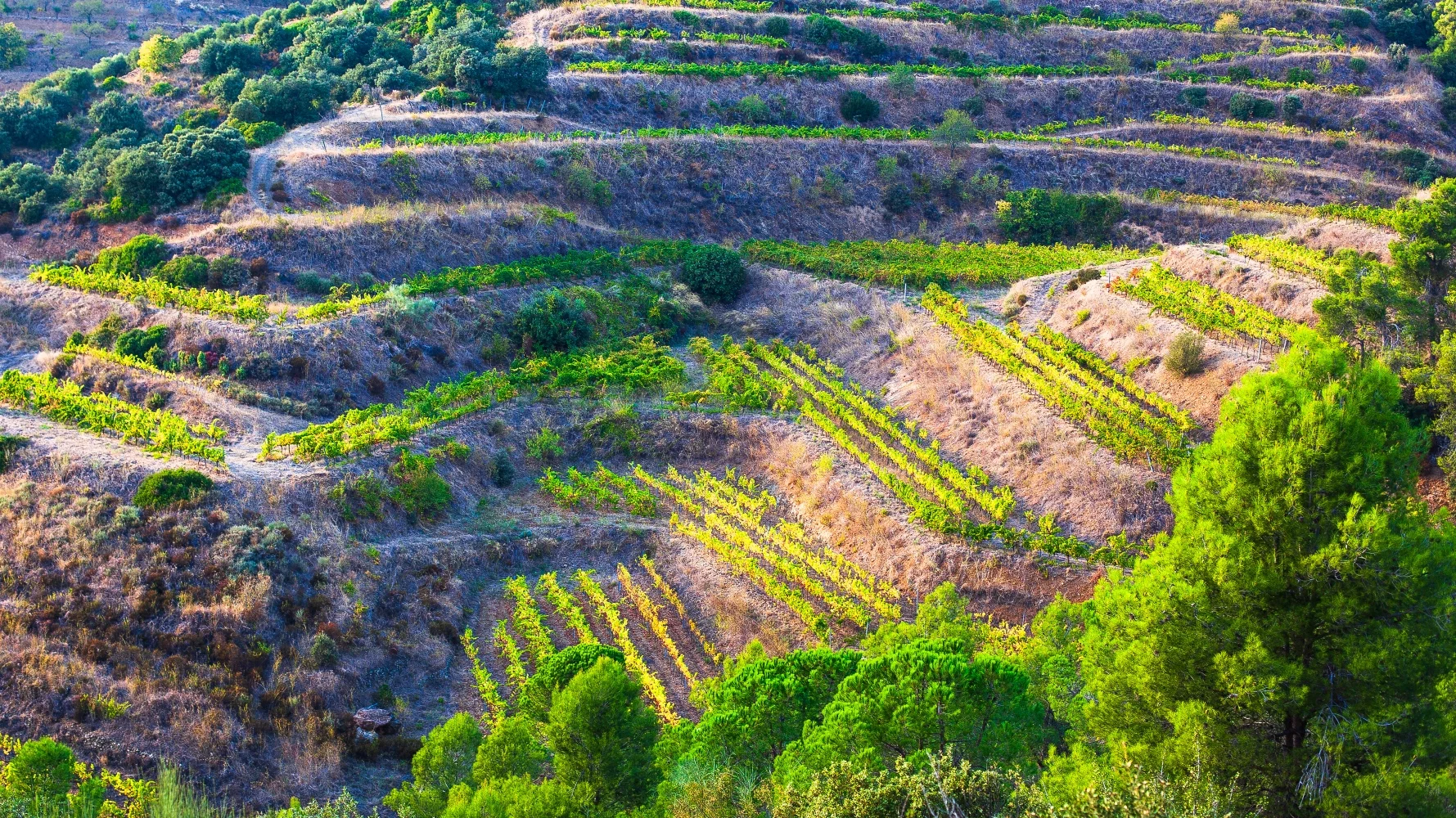
The sun does not merely rise in Priorat; it emerges as a revelation. Imagine the absolute silence of six in the morning in Gratallops, interrupted only by the crunch of licorella—that fragmented slate that serves as the very soul of this land—beneath the boots of a solitary vine-grower. The air is thick with the scent of wild thyme, damp rosemary, and that metallic, almost electric aroma that emanates from the soil after a brief night rain. This is not just a landscape; it is a vertigo-inducing amphitheater where the vines cling to impossible slopes, defying gravity and logic alike.
For the seeker of sybaritic pleasures, Priorat is not a mere stop on a map: it is Mecca. It is that corner of the world where wine ceased to be a beverage and became a geological testimony. Here, a glass of red is not “drunk”; it is “listened to.” It is the promise of a liquid velvet that carries in its molecules the heat of the Mediterranean sun and the biting cold of the Tarragona mountains. If you consider yourself a wine lover and have not felt the vibration of this soil beneath your feet while uncorking a bottle that costs three figures—and is worth every cent—your hedonistic passport is still incomplete. Welcome to the place where wine has a soul of stone and a heart of fire.

The Terroir: A Character of Shakespearian Drama
If Priorat were a character in a novel, it would be an ascetic living in the desert, possessing ancient wisdom and an intimidating intensity. The secret of its mystique lies in the licorella. This dark, brittle, shimmering slate is not just earth; it is a thermal mirror. During the day, it absorbs the implacable Catalan sun, and at night, it returns that heat to the roots of the vine, which are forced to drill meters deep into solid rock in search of moisture that seems non-existent.
Here, Garnacha and Cariñena do not simply grow; they suffer. And in that suffering, in that titanic struggle against aridity and steep gradients, is where the magic is born. The vine produces barely a few clusters, but each grape is a concentrated explosion of flavor. The climate is a game of contrasts: winters that freeze your bones and summers that feel like an embrace of lava. The result is a wine with an architectural structure, with an acidity that cuts like a diamond and a minerality that reminds you of the graphite of a freshly sharpened pencil. It is a terroir that does not forgive mediocrity, but rewards patience with bottled immortality.
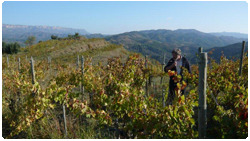


Clos Mogador: The Cathedral of Resurrection
Architecture and Vibe
Arriving at Clos Mogador is to enter the sanctuary of René Barbier, the man who saw gold where others only saw abandoned stones. Do not expect a titanium building by Frank Gehry; here, the architecture is the mountain itself. The winery integrates into the landscape with a humility that only true geniuses can afford. It is an ode to refined rusticity: local stone, aged wood, and a dim light that invites one to lower their voice. An atmosphere of alchemy breathes here, where time seems to have stopped in an era when things were made to last a thousand years.
The Oenotourism Experience
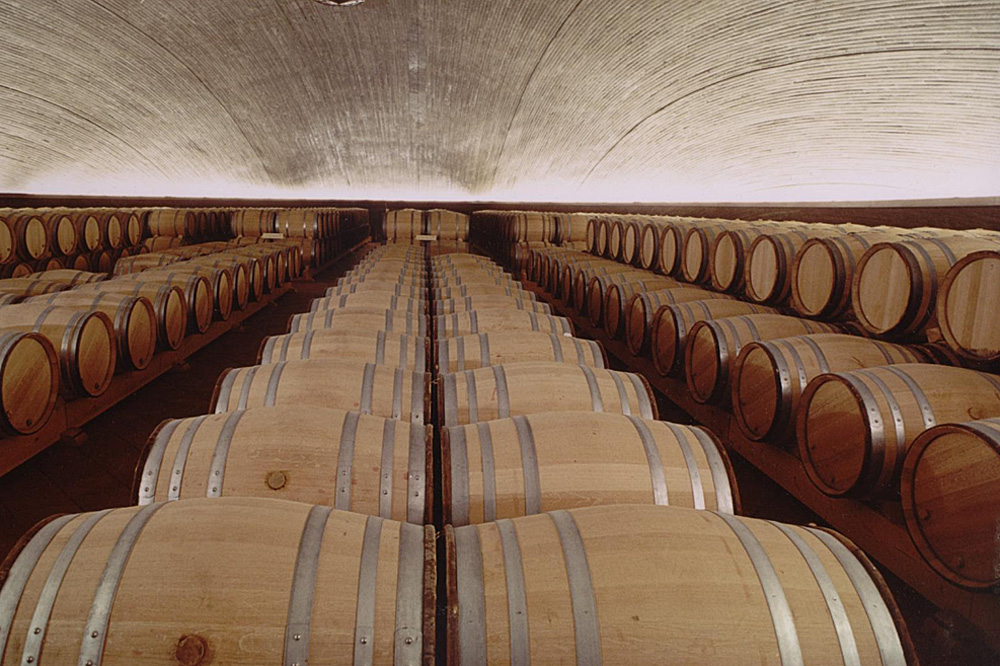
Forget about mass tours. At Mogador, the experience is almost spiritual. Descending into their cellar is like entering a sacred crypt. The air becomes dense, heavy with the aromas of evaporation—the “angel’s share.” Hearing the sound of a pipette extracting wine directly from a 2,000-liter wooden vat, in the absolute silence of the cellar, is a sensory experience that makes your skin crawl. The touch of the French oak barrels, smooth after years of use, feels like stroking living history.
The Star Wine: Clos Mogador (Vertical Tasting)
Tasting a Clos Mogador is to face a force of nature. In a vertical tasting of its best vintages:
- Recent Vintage: An explosion of black fruit, violets, and that signature graphite note. It is liquid velvet with a structure suggesting it will outlive us all.
- Ten Years Later: The wine has been tamed. Notes of pipe tobacco, fine leather, and a touch of dark chocolate appear, melting into an infinite, mineral, and saline finish. It is like drinking a sunrise in the mountains.
The Wow Factor
The best-kept secret of Mogador is its “Clos de la Eterna Juventud” (Clos of Eternal Youth): a small vineyard where the vines are so old they look like twisted sculptures by Henry Moore. If you have the luck (and the right contact), you can enjoy a private tasting in situ, sitting on the slate, watching the sun turn the valley purple while the wine in your glass reflects the exact same hue.
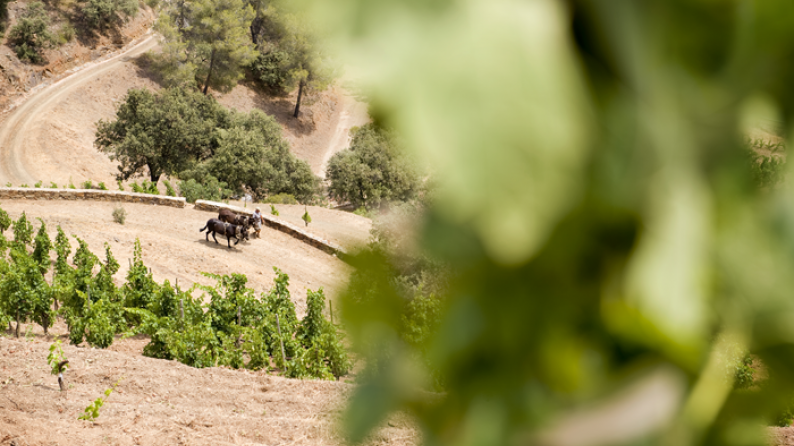
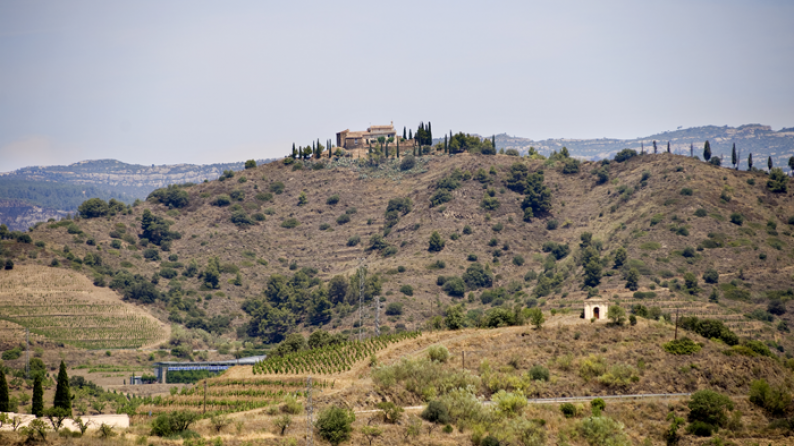



Álvaro Palacios: The Aristocracy of Effort
Architecture and Vibe
If Mogador is mysticism, Álvaro Palacios is absolute sophistication. The winery in Gratallops is a marvel of functional design and contemporary elegance. It is a space where light plays a crucial role, illuminating the processes with almost surgical precision. The vibe is one of vibrant exclusivity; one feels at the epicenter of the revolution that placed Spanish wine on the tables of collectors in New York and London.
The Oenotourism Experience
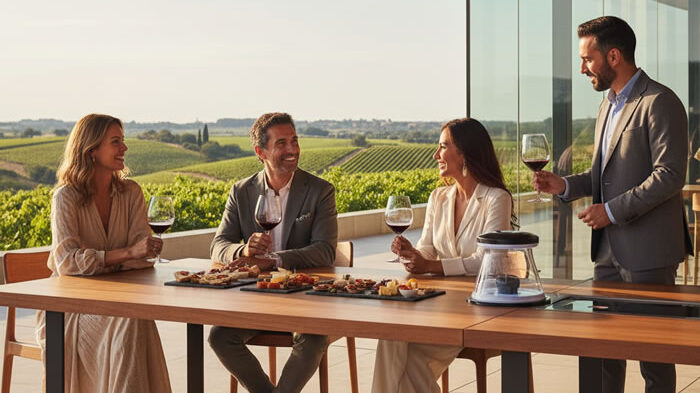
Here, luxury manifests in the details. The tour of the vineyards is often conducted in high-end off-road vehicles to reach the peaks of L’Ermita, Spain’s most iconic vineyard. The tasting in its private room, with panoramic views of the vineyard terraces, is performed with Zalto glassware that seems to disappear in the hand, letting the wine be the sole protagonist. Uncorking a bottle here is not a daily act; it is a state ceremony.
The Star Wine: L’Ermita
To speak of L’Ermita is to speak of the Holy Grail. It is a wine that redefines elegance.
- On the Nose: An intoxicating perfume of red flowers, incense, and a freshness that seems impossible for this climate.
- On the Palette: Pure silk. It has no edges. It is a perfect symphony where bright red fruit dances with notes of gunpowder and aromatic herbs. It is a wine described not with tasting notes, but with haute couture adjectives.
The Wow Factor
Exclusive access to Álvaro’s personal vintage library. It is a time tunnel where bottles rest that are not for sale anywhere in the world. Possessing an invitation to taste one of those relics alongside the winemaking team is, quite possibly, the highest status a connoisseur can aspire to in Priorat.

Food Pairing and Local Gastronomy: A Religious Communion
The food in Priorat is the necessary complement to wines of such caliber. One does not come here to diet; one comes to celebrate existence.
- Grilled Lamb: Cooked over the vine shoots (sarmientos) of the vineyard itself, the smoky flavor and marbled fat melt into the powerful tannins of an old Cariñena. It is a DNA-level pairing.
- Mountain Rice: With rabbit, snails, and wild mushrooms. The intensity of the dish requires a wine with the freshness and verticality of the region’s best whites (yes, Priorat whites are hidden gems).
- Dessert: A sweet “clotxa” or simply local blue cheese with a glass of Solera sweet wine. An experience that will make you question why you ever accepted anything less in life.
VIP Survival Guide
- Transport: Do not attempt to drive these curves if you plan on tasting. Hire a private chauffeur with local knowledge; the roads are beautiful but treacherous for the uninitiated.
- Timing: The best time is October, during the harvest, or May, when the green bursts against the gray slate.
- Reservations: Forget about “just dropping by.” At Mogador and Palacios, visits are managed months in advance and often require a professional introduction.
- Accommodation: Book one of the suites in local boutique hotels, such as Terra Dominicata, where luxury is defined by silence and a pool that seems to merge with the vineyards of a 12th-century monastery.
Priorat is not a trip; it is a transformation. When you return home and open a bottle from any other region, you will miss that whisper of slate, that struggle against the sun, and the mystique of a land that refuses to be tamed.