The Mist That Lifts the Curtain: A Cinematic Introduction
Dawn in Central Portugal is not merely a shift in light; it is a baptism. Imagine yourself standing on the balcony of a centuries-old quinta, suspended between the rugged skirts of the Serra da Estrela and the distant, rhythmic whisper of the Atlantic. The mist—thick as cotton candy yet cool as a marble caress—slowly retreats to reveal an amphitheater of vines that appear to have been combed by the gods themselves. It doesn’t smell like a generic countryside; here, the air possesses its own architecture. It is an intoxicating blend of damp earth after the rain—that petrichor that awakens primal instincts—wild rosemary, eucalyptus, and that subtle mineral trail that only decomposed granite can exhale.
Forget the Douro for a moment. While the north surrenders to the spectacle of mass tourism, Central Portugal—the regions of Dão, Bairrada, and Beira Interior—remains a secret whispered among collectors and palates seeking truth over labels. It is the “Mecca” not because it is accessible, but because it is authentic. Here, wine is not manufactured; it is sculpted.
Every glass is a promise kept. It is the sound of a cork interrupting the monastic silence of a stone cellar, the glow of a red with the color of rubies from a forgotten crown, and the texture of a white that, against all logic, tastes of white flowers and the eternity of rock. To cross this territory is to step into a map where coordinates are not latitude and longitude, but the degree of a slope’s incline and the depth of a root that has spent five centuries searching for water. Prepare yourself: what you are about to read is not a travel guide; it is the preface to your next obsession.

The Soul of the Terroir: Granite, Baga, and the Character of the Untamed
To understand Central Portugal, one must understand conflict. The geography here is a poetic battlefield between the fury of the ocean and the arrogance of the mountain. In Bairrada, proximity to the Atlantic brings a salinity that cleanses the palate and a humidity that demands winemakers with nerves of steel. Here, Baga reigns supreme—a grape that is the most fascinating character in this novel: rebellious, thick-skinned, and tannic in its youth like a misunderstood teenager, but which transforms over time into liquid silk, comparable to the finest Pinot Noirs of Burgundy or the Nebbiolos of Piedmont. If Baga were a literary character, it would be a cursed poet who ends up winning the Nobel Prize.
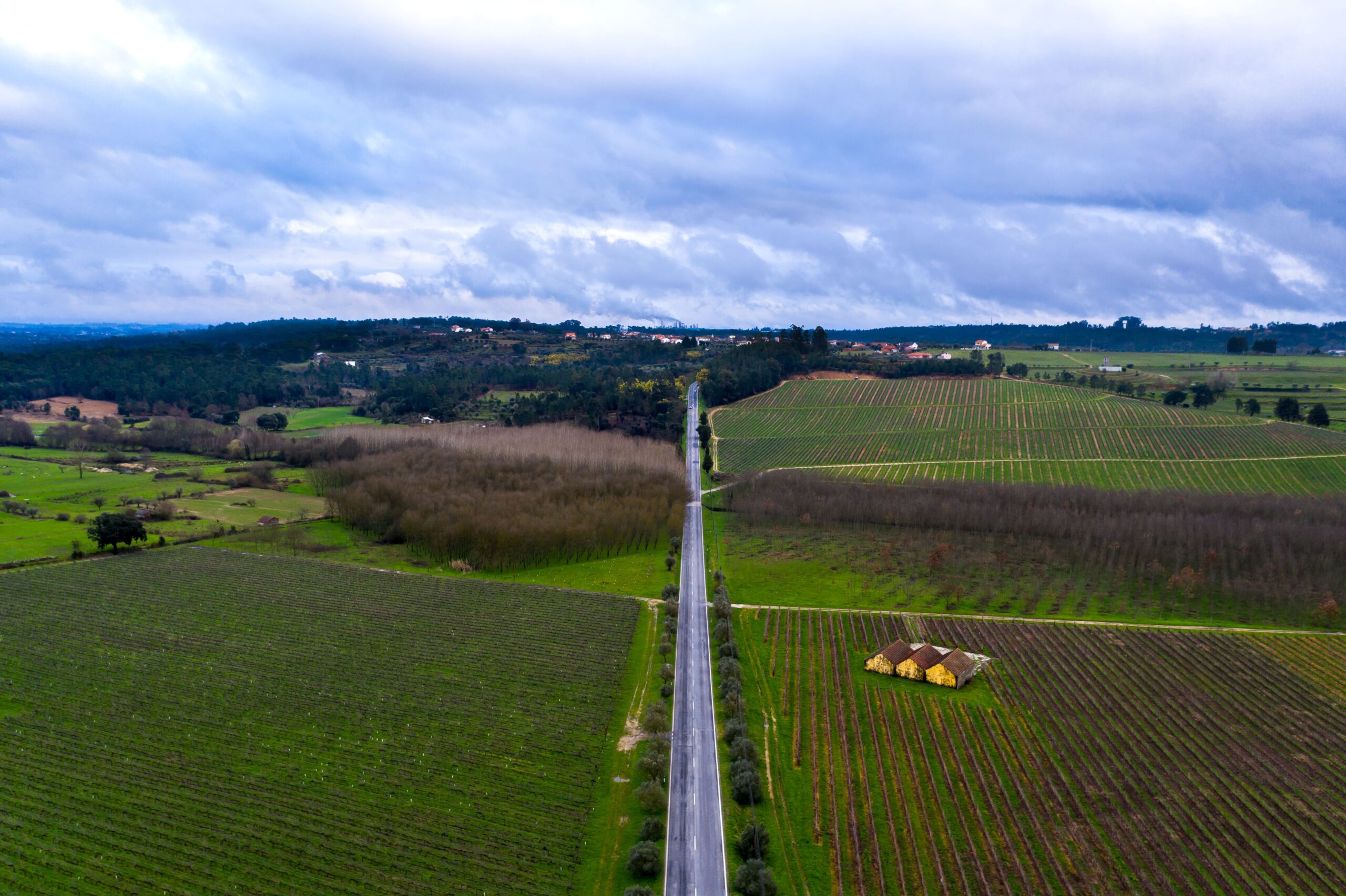
A few kilometers away, protected by the natural ramparts of the mountain ranges (Estrela, Caramulo, and Bussaco), lies the Dão. Here, the climate is more continental, more extreme. The granite soils are the soul of the region. Granite gives nothing for free; it forces the vine to suffer, to dig deep, to extract the essence of the stone. The result is wines of aristocratic elegance, possessing a natural acidity that renders them immortal.
Touriga Nacional, which many believe is exclusive to the Douro, finds its purest and most vertical expression here: less opulent, more floral, with notes of violets and bergamot that seem to float above the palate. And we must not forget Encruzado, the white queen of the Dão, a grape with the capacity to age with a grace that defies time, moving from citrus freshness to the complexity of dried fruits and honey without ever losing its mineral backbone. It is a terroir that does not ask for permission; it demands respect.


Cathedrals of Wine: A Descent into the Sublime
- Quinta da Taboadella: The Future Written in Wood and Stone (Dão)
Architecture and Vibe: Arriving at Taboadella is like stepping onto the set of a science fiction film set in the 18th century. The Amorim family (world leaders in cork) has created a masterpiece here. The winery, designed by architect Carlos Castanheira, is a timber structure that seems to float above the original Roman foundations. It is organic minimalism at its finest. Light filters through wooden slats, creating a play of shadows reminiscent of a pine forest at sunset.
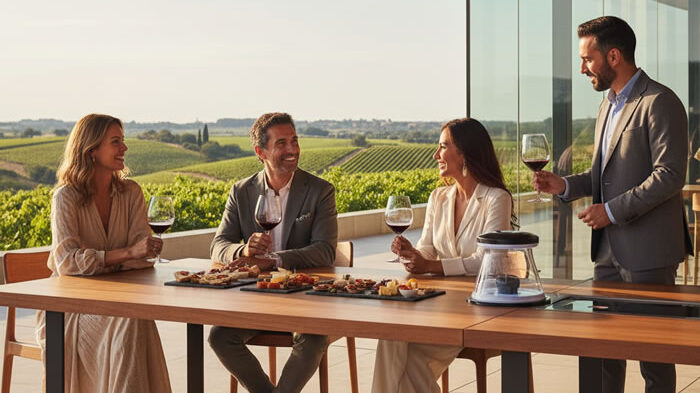
The Wine Tourism Experience: This is not a visit; it is a sensory immersion. The tour begins at the Roman lagares (stone troughs) carved into the living rock, a reminder that wine was made here before nations even existed. The descent into the barrel room is an almost religious moment. The silence is absolute, broken only by the echo of your footsteps on the gravel floor. Tastings are held in a private room with glass walls looking directly onto the vineyard, where each wine is served in Riedel glassware specific to each variety.
The Star Wine: Taboadella Grande Villae Tinto. If velvet had a flavor, it would be this wine. A blend of Touriga Nacional, Alfrocheiro, and Tinta Roriz, it explodes with ripe black fruits on the nose, but the mouth is where the magic happens: notes of graphite, cigar boxes, and a finish that evokes dawn in the mountains. It is “liquid velvet” with a structure suggesting it could live for a hundred years in your cellar.
The Wow Factor: The “Wine House” features a wooden catwalk that spans the upper section of the winery, allowing you to view the production process from a bird’s-eye perspective, smelling the fermentation while the sun sets over the Serra da Estrela. It is the place where 21st-century engineering embraces Roman tradition.


- Quinta do Encontro: The Eye of Bairrada (Bairrada)
Architecture and Vibe: If Taboadella is rustic elegance, Quinta do Encontro is pure avant-garde. From a distance, the main building looks like a giant deconstructed wine barrel—a circular structure of wood and glass that breaks the flat landscape of the Bairrada. It is bold, provocative, and utterly Instagrammable. It is a contemporary design lover’s dream.
The Wine Tourism Experience: Here, the concept is circular motion. Visitors traverse the winery on a helical ramp that emulates the turn of a corkscrew. The touch of French oak barrels mingles with the cold stainless steel of the fermentation tanks. The crown jewel is the underground sparkling wine cellar, where thousands of bottles rest in rimas, awaiting the moment of their disgorgement. The sound of a sparkling wine being uncorked here is not a pop; it is a sigh of relief.
The Star Wine: Encontro Special Edition (Espumante). Bairrada is the sparkling wine capital of Portugal, and this is its most refined ambassador. Crafted from Baga and Touriga Nacional, it features bubbles so fine they feel like lace on the tongue. Notes of toasted bread, yeast, and a citrus freshness that cuts through the richness of any delicacy. It is, quite literally, bottled energy.
The Wow Factor: The circular restaurant on the top floor. Dining there is like being in the center of a sundial, with 360-degree views over the vineyards as you sample the legendary Leitão (suckling pig) paired with their own sparkling wines. A pairing that should be considered a World Heritage site.



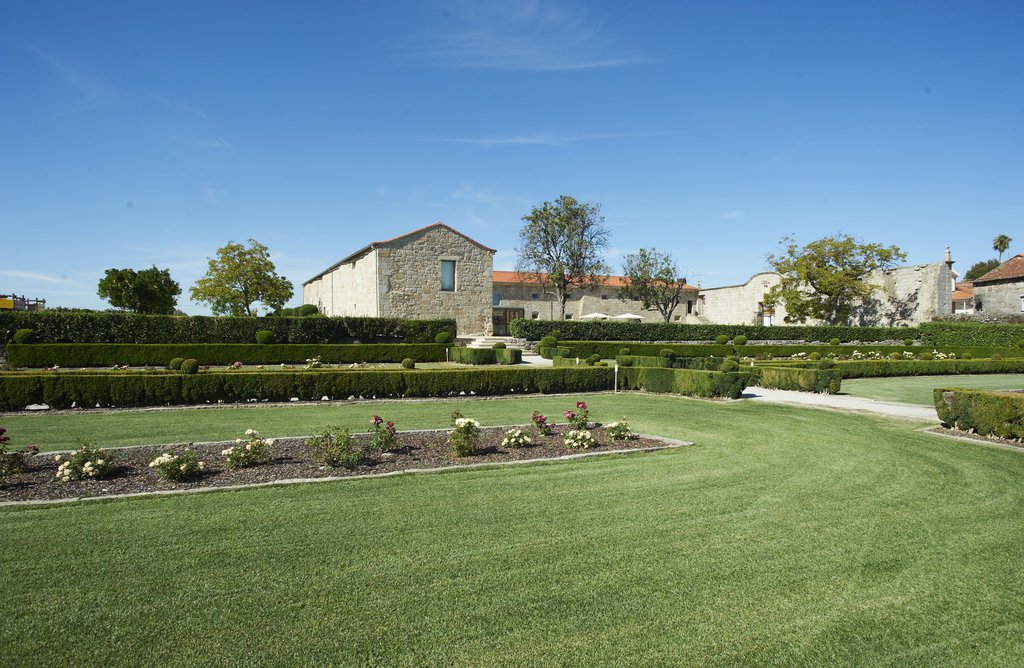
- Paço dos Cunhas de Santar: Nobility and Legacy (Dão)
Architecture and Vibe: Located in the charming village of Santar, this is a journey back to the 17th century. The Paço is a manor house with Italian-style gardens, perfectly manicured hedges, and fountains that murmur stories of Portuguese nobility. The atmosphere is one of relaxed sophistication; here, time doesn’t run—it ages. It is the kind of place where you expect to bump into an ambassador or a poet in search of a muse.
The Wine Tourism Experience: The visit includes a stroll through the “Vila Jardim,” a unique concept where vineyards are integrated into the urban fabric of the village, tucked between stone walls and wrought-iron gates. The tasting takes place in a room that used to be a library, surrounded by old books and dark wood. The service is choreographed, with sommeliers narrating the history of each plot as if they were genealogists of the grape.
The Star Wine: Vinhas do Contador Grande Escolha. This wine is a monument. Sourced from old vines and only produced in exceptional years, it is deep and complex, with notes of cedar, sandalwood, and a black fruit that appears and vanishes like an elegant ghost. On the palate, it is dense yet possesses a vibrant acidity that keeps it youthful.
The Wow Factor: The secret tunnel connecting the main house to the ancient cellars. Walking through that dark stone passage, with just the right amount of humidity and the scent of old wine, is the closest you will ever get to time travel. At the end of the tunnel, a candlelit table awaits for a private vertical tasting of vintages not available to the general public.


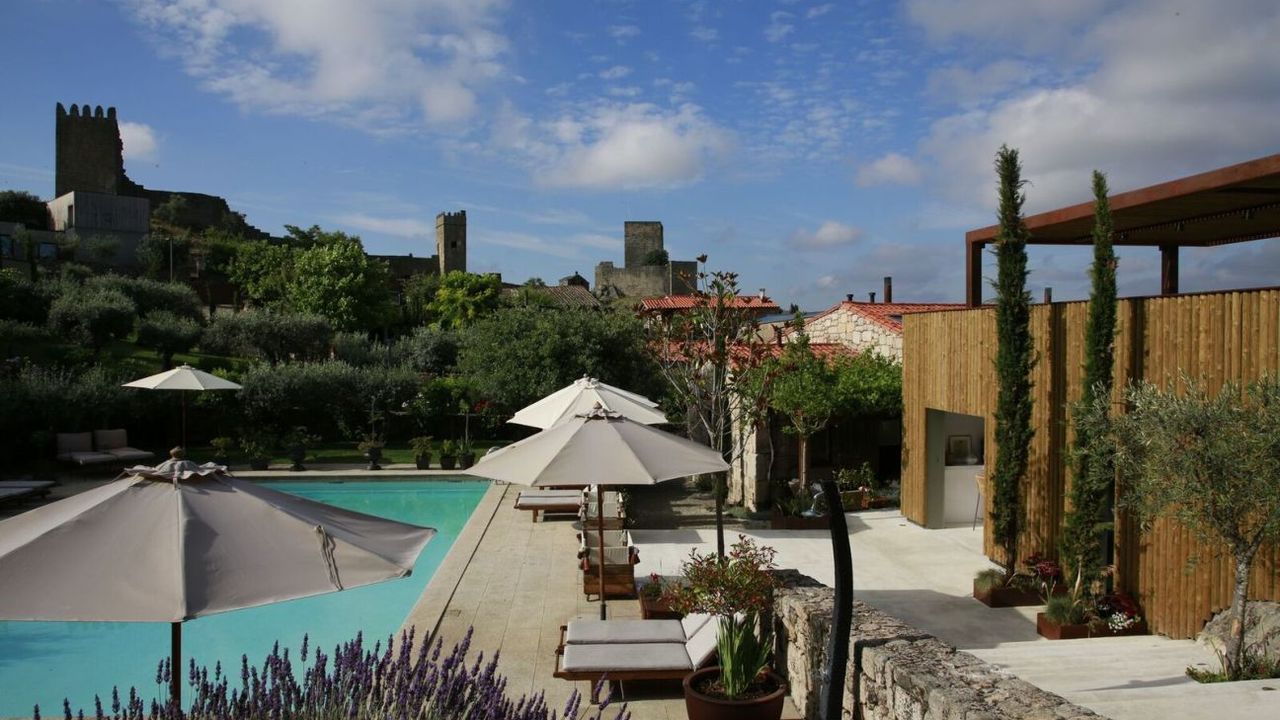


- Casas do Côro / Quinta do Cardo: Border Luxury (Beira Interior)
Architecture and Vibe: Situated in the historic village of Marialva, this experience combines a restored medieval village with high-altitude winemaking. The architecture is a blend of rustic granite and ultra-luxury interior design. It is remote, silent, and incredibly exclusive. It is the perfect hideaway for those looking to disappear off the radar without sacrificing 600-thread-count sheets and an unsurpassed glass of wine.
The Wine Tourism Experience: Beira Interior is the highest wine region in Portugal. Here, the experience focuses on purity. Tastings are offered outdoors under skies so starry they seem surreal, or in the property’s modern Wine Lounge. The feeling is that of being at the edge of the world, but with a personal sommelier at your beck and call.
The Star Wine: Quinta do Cardo Vinha do Taco. A high-altitude wine, literally. The altitude grants a unique freshness and aromatic intensity. Notes of wildflowers, a sharp minerality, and an elegance that only the mountain cold can sculpt. It is a “naked” wine—honest and powerful.
The Wow Factor: The Eco-Sustainable Spa among the vines. Imagine a vinotherapy treatment followed by a dip in an infinity pool that seems to spill over toward the ruins of Marialva Castle, all while a waiter brings you a perfectly chilled glass of Síria (the local white grape).

A Feast for the Senses: Pairing and Gastronomy
Eating in Central Portugal is a religious experience. Do not look for impossible foams or pretentious deconstructions; here, luxury lies in the product and in tradition elevated to excellence.
- Leitão da Bairrada: The mandatory companion for the local sparkling wine. The crispy, salty skin of the suckling pig needs the acidity and bubbles to balance the fat. It is a perfect dance on the palate.
- Queijo da Serra da Estrela: Forget everything you know about cheese. This is a sheep’s cheese with a soft, almost liquid paste that is eaten with a spoon. Paired with a barrel-aged Encruzado white, it creates a symphony of textures and flavors that border on the sinful.
- Chanfana: Old goat meat slow-cooked in red wine inside black clay pots. It is the essence of slow-fire cooking. Order it with a Baga red with at least ten years of age; the wine’s structure will cut through the intensity of the meat like a silk scalpel.
- Wild Mushrooms: In autumn, the forests of the Dão provide porcini and chanterelles which, sautéed with a little garlic and Iberian ham, are the ideal pairing for Touriga Nacional.
VIP Survival Guide: The Art of Effortless Travel
For the traveler who accepts nothing less than excellence, Central Portugal requires impeccable logistics.
- Transportation: Do not attempt to drive these winding roads yourself if you plan on enjoying the tastings. Hire a private chauffeur with expert local knowledge. For the truly bold, a helicopter transfer from Lisbon or Porto to the private strips of certain estates is the only way to appreciate the majesty of the vineyard terraces.
- Timing: Harvest season (September) is magical, but for total exclusivity, choose May or June. The weather is perfect, the vineyards are at their greenest, and the wineries offer more personalized service.
- Private Bookings: Never show up without an appointment. The premium experiences described—vertical tastings, secret tunnel dinners—are only available upon prior request and for very small groups.
- The Return Suitcase: Leave space. Many of these wineries have “Cellar Door” limited editions that never reach the luxury shops of London or New York. Buying a case here is not an expense; it is an investment in your future happiness.
Central Portugal is not a place you visit; it is a state of mind that sticks to your skin and your memory. It is the realization that true luxury is not the most expensive thing, but the most authentic—that which has deep roots in the earth and wings in the glass. Are you ready for the maps to stop being mere drawings and become the stage for your next great story?