The Awakening of the Senses: A Prologue of Salt and Solera
Jerez is not merely visited; it is inhaled. Imagine the Andalusian sun—the kind that falls with the crushing verticality of a final sentence—suddenly deciding to soften as it strikes stone walls three meters thick. The air shifts. Abruptly, the outside world—with its digital noise and 21st-century haste—evaporates, replaced by a silence that possesses physical weight, a shadows that glow, and a scent that is, in essence, the very definition of civilization: noble oxidation (rancio), ancient wood, and the Atlantic salinity traveling on the back of the Poniente wind.
Close your eyes. It is early morning, and you are standing in the heart of the “Golden Triangle.” The dew has not yet evaporated from the leaves of the Palomino grapes, and beneath your feet, the earth crunches. It isn’t just any earth. It is Albariza, that blindingly white chalk that seems to guard the secret of eternity within its pores. A journey to Marco de Jerez is, for the seeker of premium experiences, what Mecca is to the devout or Everest to the climber; it is a return to the origin of the most complex, misunderstood, and ultimately sublime wine on the planet.
Here, wine is not “made”; it is “educated.” Stepping into one of its cathedral-like bodegas is to attend a liturgy where time is the sole master of ceremonies. We are not facing a simple enological route; we are witnessing an immersion into an aristocracy of the spirit, where every glass tells the story of navigators, poets, and families who decided that perfection cannot be rushed. Prepare yourself, for we are about to uncork the soul of a region that, once it catches you, never lets you go without keeping a piece of your heart stored in an American oak butt.

The Protagonist: The Terroir and the Miracle of Albariza
To understand Jerez, we must speak of its silent protagonist: geography. If Marco de Jerez were a period novel, Albariza would be the tragic and beautiful heroine. This limestone soil, of a white so pure it reflects light to the point of dazzling, is a geological sponge. During the winter, it absorbs every drop of rain, sealing the surface with a hard crust under the summer sun to maintain moisture at the roots, meters below the surface. It is an act of heroic resistance.
The climate here is a constant dialogue between two winds: the Levante, warm and dry, blowing from the interior and scorching the vines, and the Poniente, that fresh Atlantic breath that brings the humidity necessary for the “flor” (that magical layer of yeast) to live and protect the wine. This duality creates a microclimate unique in the world.
The Palomino Fino grape is, for its part, a blank canvas. It is a grape humble in sugars and primary aromas, yet it possesses a chameleonic ability to absorb the personality of its aging. It is the raw material that the Criaderas and Soleras system will transform into velvet. This system, a cascade of barrels where young wine is blended with the old, ensures that quality is an eternal constant. In Jerez, the wine you drink today contains particles of wine raised a hundred years ago. It is, quite literally, drinking liquid history.


The Cathedrals of the Spirit: A Detailed Analysis
- Bodegas Tradición: Where Art is Drunk and Wine is Admired
If there is a place on earth that personifies exclusivity without ostentation, it is Bodegas Tradición. Forget mass tours and plastic souvenirs. Entering here is gaining access to a private club where the aristocracy of wine merges with the history of Spanish art.
Architecture and Vibe Tradición does not seek to impress with star-architect facades; its luxury is interior. Located in the old quarters of Jerez, the building breathes sobriety. The vibration is that of an ancient library or a private sacristy. There is no noise, only the echo of your footsteps on the albero sand floor and the occasional drip from a tap. It is a “boutique winery” in the purest sense, dedicated exclusively to wines of extreme age (VOS and VORS).
The Oenotourism Experience The visit begins with a descent into the shadows. Here, the air is dense, loaded with notes of roasted walnuts and old varnish. The sommelier will guide you among butts (botas) that look like monuments. The sound of the cork being pulled is almost a sacrilege in this sepulchral silence. Tastings are conducted directly from the butt, using the venencia (a long-handled dipping cup) with a mastery that resembles a dance. But what truly takes your breath away is the transition from the cellar to the art gallery.
The Wow Factor: The Joaquín Rivero Collection This is the detail you won’t find anywhere else: one of the finest private collections of Spanish painting in the world resides inside the winery. Imagine tasting an Oloroso VORS over 30 years old while contemplating, inches away, original works by Goya, Zurbarán, Velázquez, or El Greco. It is perfect synesthesia: the amber hue of the wine seems to leap from the canvas into your glass. It is an experience that transcends gastronomy to become something spiritual.
The Star Wine: Palo Cortado VORS If I had to choose a single word for this wine, it would be “Epiphany.” On the nose, it is a labyrinth of toasted hazelnuts, noble woods, and a hint of pipe tobacco. Upon tasting, it is liquid velvet. It possesses the elegance of an Amontillado on the nose but the structure and roundness of an Oloroso on the palate. It is a persistent wine that lingers like a childhood memory you never want to let go of. Notes of graphite, of sunrise in the countryside, and a saline finish that reminds you the sea is near.


- González Byass: The Empire of the Sun and the “Cathedral of Tío Pepe”
If Tradición is the monastery of wine, González Byass is its Vatican. It is an institution, a global symbol, and undoubtedly one of the most spectacular wineries on the planet.
Architecture and Vibe Here, the scale is monumental. The La Concha cellar, designed by Gustave Eiffel himself, is a circular structure of iron and glass that defies gravity and time. But the true jewel is the Los Apóstoles Cellar, a “cathedral” of soaring ceilings and infinite naves where light filters through, creating a play of shadows that looks like it was designed by a Hollywood cinematographer. The atmosphere is vibrant, historic, and profoundly proud of its legacy.
The Oenotourism Experience The VIP service here is impeccable. You will be received with a treatment that makes you feel like an ambassador. A private visit includes access to the “Sacristy,” where the family’s crown jewels are kept. The sound of footsteps on the interior cobblestone streets, flanked by bougainvillea, is the soundtrack of a Jerez that refuses to fade. The tasting takes place in private lounges where crystal glasses shimmer under chandeliers, and the service is performed with surgical precision.
The Wow Factor: The Drunken Mice and Royal Signatures Beyond the majesty, González Byass possesses a charming wit. You will see a small wooden ladder leaning against a glass of wine: it is for the winery’s mice, a tradition that says they too deserve to enjoy the nectar. Additionally, you can see butts signed by figures ranging from Winston Churchill to Steven Spielberg. This is where world power has come to pay homage to Tío Pepe.
The Star Wine: Tío Pepe Cuatro Palmas We are talking about a Fino that has defied time. An ancient Amontillado that retains the soul of a Fino. It is pungent, wild, with notes of damp chalk, ancient woods, and a concentration of flavor that almost feels solid. It is a wine for meditation, complex like a Bach fugue and vibrant like a flamenco guitar solo.


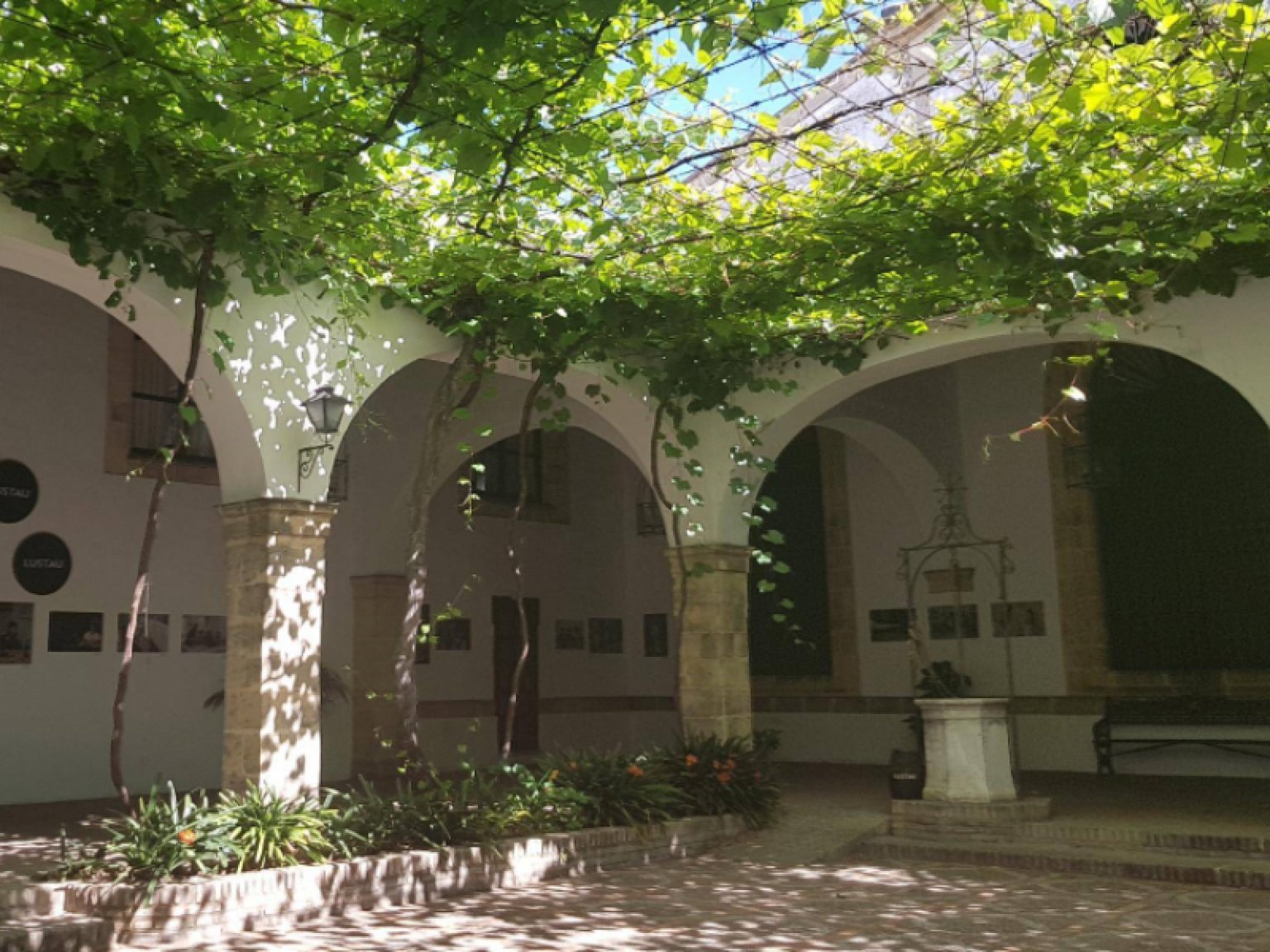


- Bodegas Lustau: The Refined Art of Diversity
To complete the trilogy, one must visit Lustau, the perfect example of how Neogothic architecture and British elegance fused with the Andalusian character.
Architecture and Vibe Its naves reach dizzying heights, designed so that air can circulate and maintain the ideal temperature. It is a “Cathedral Winery” in the most literal sense. The aesthetic is flawless: perfectly leveled albero floors, butts aligned with military precision, and a cleanliness that allows the aroma of the wine to be the sole protagonist.
The Star Wine: Amontillado VORS A wine that is pure cold fire. Topaz in color with golden rim. In the mouth, it is dry, heroic, with an aftertaste that lasts for minutes. It is the wine an international spy would choose for a last supper.

Food Pairing and Gastronomy: A Communion on the Palate
Eating in and around Jerez is not a formality; it is a sacrament. For your experience to be truly religious, you must follow these commandments:
- Almadraba Tuna and Fino: The perfect pairing. The intramuscular fat of the wild bluefin tuna from Barbate surrenders to the dryness and salinity of a cold Tío Pepe. It is an explosion of the sea in your mouth.
- Ibérico Bellota Ham and Amontillado: The fat of the ham, with its nutty notes, finds its soulmate in the toasted dry fruit profile of the Amontillado. It is a dialogue of sages.
- Kidneys in Sherry (Riñones al Jerez): A classic that, when made with a high-quality Oloroso, acquires a depth that will make you forget any prejudice against offal.
- Desserts and Pedro Ximénez: Pour a splash of PX over high-quality vanilla ice cream or pair it with a powerful blue cheese (like Cabrales or Roquefort). The contrast between the raisin sweetness and the spicy kick of the cheese is, quite simply, the climax of the journey.
VIP Survival Guide: The Art of Frictionless Travel
If you seek absolute exclusivity, the Marco de Jerez knows how to treat you.
- Transportation: Do not drive. Hire a private chauffeur who knows the dirt tracks between the vineyards (pagos) like Macharnudo or Añina. The light of sunset over the white hills with a glass in hand is a luxury that cannot be enjoyed from behind the wheel.
- Accommodation: The Hotel Bodega Tío Pepe is the obvious and excellent choice. It is the first hotel located inside a winery, offering views of the Cathedral and the Alcázar that will make you feel like the owner of the city.
- When to Visit: Avoid the scorching August. Go in September for the Harvest Festivals (Fiestas de la Vendimia) or in Spring, when the scent of orange blossom competes with the aroma of the solera in the streets of Jerez.
- Etiquette: “Casual Chic” with a touch of linen is perfect. Jerez is elegant yet nonchalant. And remember: never, under any circumstances, call Sherry a “dessert wine” in front of a local. It is a wine for the entire meal, and for an entire lifetime.