I. Introduction: The Awakening of a Sleeping Giant
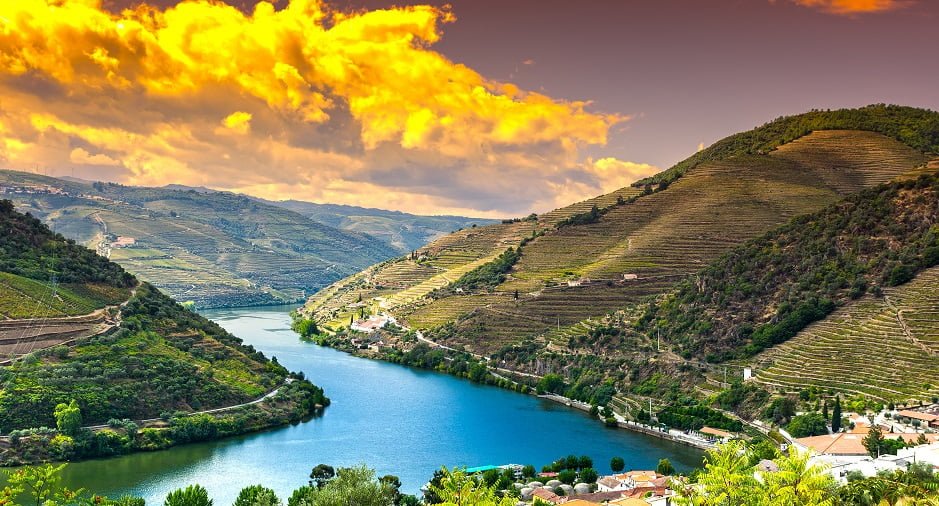
The sunrise in the Cima Corgo is not merely the start of a new day; it is a visual epiphany. While Lisbon is still yawning under its Atlantic shroud of mist and the rhythmic rattle of the Alfama trams begins to pierce the silence, here, three hours to the north, the world operates on a different frequency. The air, dense and heavy with the primordial perfume of esteva (rockrose) and damp schist, caresses slopes that plunge headlong toward a river that looks like liquid mercury.
There is nothing in the capital that prepares you for the sheer scale of the Douro Valley. It is a cathedral built not by crown architects, but by generations of men and women who sculpted the mountains with their bare hands, creating an impossible geometry of gravity-defying terraces. Imagine absolute silence, broken only by the crunch of your footsteps on the slate soil—that xisto which holds the sun’s heat like a well-kept secret.
As you uncork a bottle of Vintage Port or a small-production aged red on a private terrace suspended over the abyss, you finally understand the grand conspiracy: Lisbon is the storefront, the pretty face for the masses; but the Douro is the beating heart, the storehouse of Portugal’s deepest dreams. It is the Mecca for the hedonist who no longer seeks to be seen, but seeks to feel. We are standing before the largest and most spectacular mountain vineyard in the world, a UNESCO World Heritage site where luxury is not measured in square meters of marble, but in the depth of a vintage and the exclusivity of access that the average tourist doesn’t even know exists. Welcome to the best-kept secret of the Old World.

II. The Terroir: A Character of Indomitable Spirit
If the Douro were a character in an Eça de Queirós novel, he would be an aristocrat with sun-weathered skin, strong hands, and a razor-sharp intellect. His soul resides in the Schist. This metamorphic rock, which laminates into thin vertical layers, is responsible for the magic. In a climate of extremes—what locals call “Nove meses de inverno e três de inferno” (nine months of winter and three months of hell)—the vine roots must drill through meters of solid rock to find moisture that simply does not exist on the surface.
This struggle of the plant is what grants the wine its nerve and backbone. We are not talking about easy or complacent wines. The queen grape, Touriga Nacional, is a temperamental diva: she produces little and is difficult to cultivate, but she delivers an aromatic complexity of violets and bergamot that is, quite simply, intoxicating. Alongside her, Touriga Franca provides the structure—the skeleton that allows these wines to age with more grace than a Golden Age Hollywood star.
Climate here is not a statistic; it is a duel. The winds sweeping down from the Marão mountains block the Atlantic’s influence, creating a microclimate where the grapes concentrate, caramelizing under the sun and mineralizing through the soil. The result is a “terroir” you can feel on the tip of your tongue: a stony salinity, an explosive black fruit, and an acidity that cuts through the air like a silver knife.


III. The Cathedrals of Wine: A Journey into Exclusivity
- Quinta do Vallado: The Vanguard in the Land of Ancestors
Architecture and Vibe: Located on the banks of the Corgo River, Quinta do Vallado is the perfect example of how the past can dialogue with the future without losing its cool. The property originally belonged to the legendary Dona Antónia Adelaide Ferreira (the “Ferreirinha”), but today it is a monument to contemporary architecture. Its winery, designed by architect Francisco Vieira de Campos, is a monolith of black schist that seems to emerge from the mountain itself. It is pure minimalism: clean lines, dramatic shadows, and an absolute respect for the landscape.
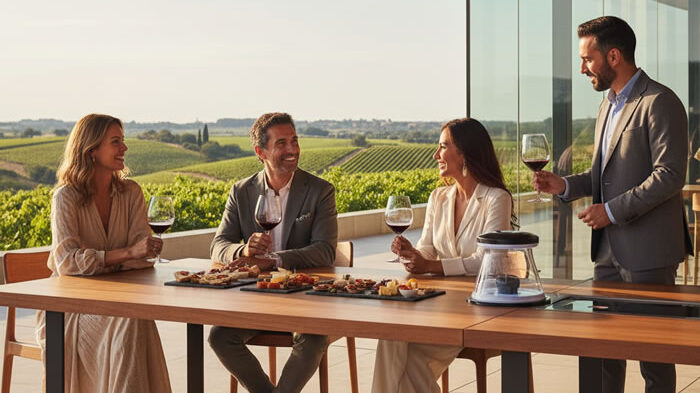
The Wine Tourism Experience: Crossing the threshold of their barrel cellar is like entering a spacecraft dedicated to the cult of Bacchus. Echoes are non-existent, absorbed by oak and stone. Here, luxury is silence. Private tours allow you to descend to the deepest levels, where the temperature is constant and the aroma of vanilla, cedar, and ripe fruit wraps around you like a silk cloak. The tasting takes place in a glass-walled room floating over the vineyards, where time seems to stand still as the sommelier guides you through specific plots.
The Star Wine: Vallado Adelaide Tributo. This is not a wine; it is an elegy. Sourced from vines over 100 years old, it is liquid velvet. On the nose, it is a burst of graphite, exotic spices, and black fruit so dense you could almost bite it. On the palate, it has the power of a V12 engine but the finesse of a ballet dancer. Every sip tells a story of a century of survival.
The Wow Factor: The adjacent design hotel. Sleeping in the “Schist Building” is a sensory experience in itself. But the true secret is its infinity pool that appears to spill directly into the Douro River at sunset. It is the place where CEOs of major tech firms come to disappear from the map.


- Quinta do Crasto: The Watchtower of the Gods
Architecture and Vibe: If Vallado is the future, Crasto is eternity. Perched atop a craggy hill, this estate offers, without a doubt, the most cinematic views in the entire region. The main house maintains the charm of the Portuguese rural aristocracy: whitewashed walls, blue and yellow tiles, and a courtyard where time forgot to run. It is a place that demands a linen suit and an attitude of “dolce far niente.”
The Wine Tourism Experience: This is not your average tasting; it is an immersion into history. The experience begins with a 4×4 tour of vineyards that seem to tumble into the void. Descending into the centuries-old cellars, with their wooden ceilings and massive stone walls, prepares you for the ritual. Here, uncorking a Vintage with red-hot tongs (a traditional technique to avoid damaging aged cork) is a spectacle that every wine lover must witness at least once in their life.
The Star Wine: Quinta do Crasto Vinha Maria Teresa. Named after a mythical plot of old vines, this wine is the epitome of elegance. It is a kaleidoscope of notes: tobacco, sandalwood, wild blackberries, and a hint of rockrose after the rain. Its tannins are like lace: present but incredibly fine. It is a wine that does not scream for attention; it simply commands the room with its presence.
The Wow Factor: Its pool, designed by Pritzker winner Eduardo Souto de Moura. It has been repeatedly voted one of the best in the world. Swimming in it while watching the rabelo boats zigzag along the Douro hundreds of feet below is a religious experience.


- Quinta Nova de Nossa Senhora do Carmo: Relais & Châteaux Refinement
Architecture and Vibe: Quinta Nova is sophistication made vineyard. It is the first property in Portugal dedicated to the “Wine Museum Farm” concept. The atmosphere is one of serene, classic luxury. The 18th-century chapel that gives the property its name still blesses the passing boats, and the original 1764 winery has been restored to offer an impeccable aesthetic experience. It is where elegance meets the earth.
The Wine Tourism Experience: Here, the focus is on “terroir.” The premium experience includes a guided hike through the estate’s historical trails, followed by a technical tasting in its wine library. Imagine sitting in a leather armchair surrounded by bottles dating back decades, while tasting micro-lots that never hit the general market. The attention to detail is almost obsessive, from the service temperature to the specific Riedel glassware used for each varietal.
The Star Wine: Quinta Nova Referência. A blend of Touriga Nacional and Tinta Roriz that redefines freshness in a warm climate. It is vibrant, with an electric acidity and notes of fresh red fruits, white pepper, and a mineral quality reminiscent of flint. It is an “intellectual” wine that evolves in the glass every minute.
The Wow Factor: Its “Wine Museum.” It houses a private collection of viticultural artifacts that narrate the history of the Douro since Roman times. But the true “wow” is a private dinner in the winter garden, where the tasting menu is paired with wines that are family treasures, all under candlelight and the sound of crickets.

IV. Gastronomy: The Angels’ Pairing
Eating in the Douro is not a nutritional activity; it is a sacrament. Forget diets. Here, the protagonist is local produce elevated to its highest power.
You must try the Cabrito Assado (roasted kid goat) in a wood-fired oven, its meat melting at the touch of a fork, paired with a structured reserve red. You cannot leave without tasting the Bacalhau à Transmontana, a more robust and rustic version than what you’ll find in Lisbon, often accompanied by an extra virgin olive oil produced on the same wine estates that will make you weep with joy.
For the brave, the Alheira de Mirandela (a sausage with Sephardic history) fried until the skin crackles, is the perfect companion for a high-altitude white aged on lees. And for dessert, the coup de grâce: Queijo da Serra (creamy sheep’s cheese) with pumpkin jam and a glass of 20 Year Old Tawny Port. That pairing is proof that there is a God, and He wants us to be happy.
V. VIP Survival Guide: The Art of Traveling Well
- Logistics: Forget the rental car if you want to truly enjoy yourself. Hire a private chauffeur or, better yet, arrive on The Presidential Train, a restored historical gem that offers gourmet banquets while you traverse the valley.
- Arriving by Air: For the ultimate exclusivity, book a helicopter from Porto Airport (OPO). The 20-minute journey offers the most breathtaking view of the terraces imaginable and will land you directly on the private helipads of the Quintas.
- Timing: The best time is during the harvest (September). It is the most beautiful chaos in the world. If you seek absolute peace, May is the month: the valley is an explosive green and the weather is a gentle caress.
- Booking: In these circles, improvisation is the enemy of luxury. Visits to private cellars and exclusive dinners should be booked at least three months in advance.
The Douro is not visited; it is absorbed. Lisbon is a cheerful Fado song for tourists; the Douro is the deep, sustained note that resonates in your chest long after the bottle has been emptied. It is time to leave the surface behind and dive into the depths of the authentic Portugal.