The Symphony of Silence: A Sunrise in Alentejo
One does not simply visit the Alentejo; one succumbs to it in the most glorious way possible. This is not a destination for those seeking the neon frenzy of a digital age or the frantic urgency of Europe’s grand capitals. Here, time does not run; it crawls with the deliberate parsimony of a lizard sunning itself on a schist stone under the relentless August sun.
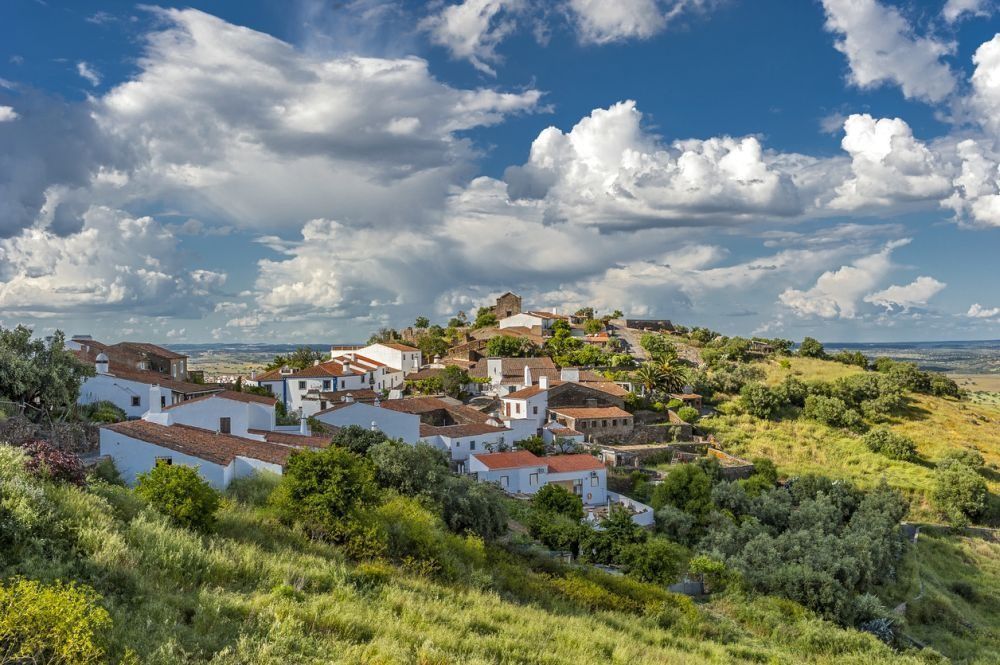
Imagine this: it is six in the morning near the medieval heights of Monsaraz. A silver mist, almost dreamlike and weightless, clings to the undulations of the plain as if reluctant to wake. The air is an intoxicating perfume—a blend of damp rockrose (esteva), aged cork, and that electric, mineral scent released by thirsty earth after an unexpected midnight rain. There is no sound of engines, only the rhythmic crunch of your own boots on the granitic soil and the distant, lonely bleat of a sheep that seems to understand the rhythm of the universe far better than we do.
Before you, legions of vines stretch toward the horizon, aligned with military precision yet possessing an ancestral wisdom. Their twisted trunks tell stories of decades spent resisting a heat so fierce it borders on the biblical. But the true treasure is not what you see. It is beneath your feet, or behind the thick, whitewashed stone walls of the adegas. There, in a sacred twilight, the wine rests. But it does not hide in the cold, sterile stainless steel of the industrial era, nor solely in the domesticated oak of France. In the heart of deep Alentejo, wine returns to the womb: the Talha. These are the clay amphorae brought by the Romans two millennia ago—vessels that, fortunately for us, never quite left.
This is the Mecca for the hedonist who has already tasted it all. It is a pilgrimage back to purity, where the sommelier seeks not just structure and tannins, but the very soul of a land that refuses to be tamed. If you are searching for the “next big thing,” you are already late; Alentejo has always been here, waiting for your palate to be mature enough to understand its language.
The Terroir: Where the Sun Becomes Stone and the Grape Becomes Character
To understand Alentejo wine, one must view its geography as the biography of a tragic hero. Occupying a third of Portugal, this vast region is a tapestry of golden plains, cork oak forests (the famous montado), and rugged outcrops of granite, schist, and marble.
The Climate: A Romance of Fire
The climate is, in a word, brutal. Summers are a bonfire that tans the skin of the grape until it becomes an armor of polyphenols. However, at night, the Alentejo sighs. The thermal amplitude is the secret behind that vibrant freshness that catches you off guard in wines that, by logic, should be heavy. It is this duality—the fire of the day and the chill of the night—that gives these wines a dramatic tension that is pure theater in the glass.
The Protagonists: Grapes with a Pedigree
Forget, for a moment, Cabernet or Chardonnay. Here, the queens bear names that sound like ancient incantations:
- Antão Vaz: The White Lady. Structured, firm, boasting notes of ripe tropical fruit and an aging potential that defies the calendar.
- Trincadeira: Capricious in the vineyard, but floral and spicy in the glass. She provides the “nerve” and elegance.
- Alicante Bouschet: Though French by birth, she found her spiritual home here. One of the few teinturier grapes (red pulp), she produces wines of almost Gothic opacity and eternal longevity.
- Aragonez: The local iteration of Tempranillo, which here acquires a meatiness and a wild red fruit profile that is pure velvet.
The soil is not merely a stage; it is an ingredient. The clay used to craft the amphorae comes from the same earth where the vines take root. To drink a Talha wine is, quite literally, to drink the landscape processed by time and earth.


The Cathedrals of Clay: A Premium Pilgrimage
I have curated four estates that are not merely wineries; they are manifestos. These are places where luxury is not about ostentation, but about the privilege of touching history with your fingertips.
- Herdade do Esporão: The Titan of Art and Earth
Architecture and Vibe: Arriving at Esporão feels like entering an estate Gehry might have dreamed up if he were an Alentejan nobleman. Located in Reguengos de Monsaraz, its architecture is a masterclass in landscape integration. The medieval tower stands as a sentinel over a sea of organic vineyards. The design is clean and minimalist, where raw concrete and warm wood dialogue with the horizon. Here, the ultimate luxury is space.
The Wine Tourism Experience: Do not settle for a standard tasting. The “VIP Heritage Tour” allows you to descend into the bowels of the winery, where the temperature drops ten degrees instantly and the scent of damp cellar envelops you. The sound of a cork being pulled here echoes like a gunshot in a cathedral. You can touch the gargantuan clay pots where the most exclusive whites ferment, then indulge in a lunch at their Michelin-starred (and Green Star) restaurant, where every ingredient was harvested within a mile of your table.
The Star Wine: Esporão Private Selection (Red) A vertical tasting of this giant is non-negotiable. We are talking about a structure that is pure graphite and power. On the nose, it evokes a Mediterranean forest after a fire: notes of rockrose, bitter cocoa, and a black fruit so dense it feels chewable. It is liquid velvet that expands on the palate with a persistence that lingers until the following morning.
The Wow Factor: The Label Collection. Every year, a renowned artist is commissioned to design the label for the flagship wine. They house a private gallery where wine and contemporary art collide. It is perhaps the only place on earth where you can debate the brushwork of an oil painting while swirling a glass of world-class viticulture.


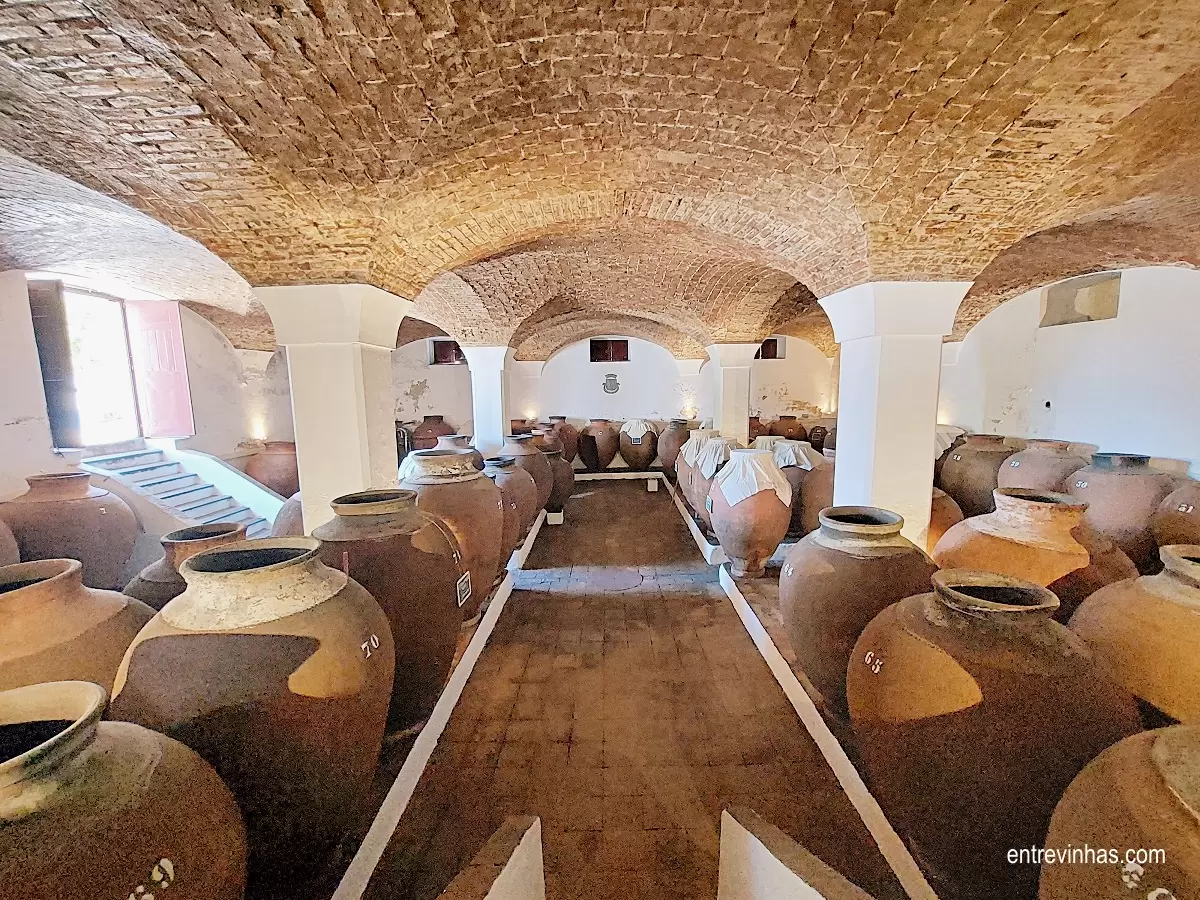
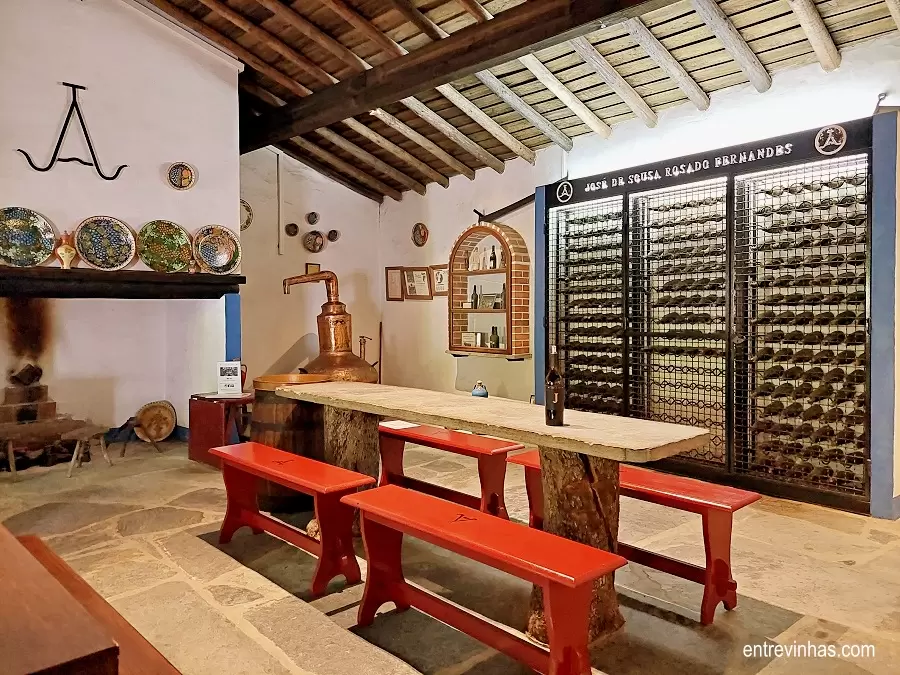


- Adega José de Sousa: The Temple of Living Tradition
Architecture and Vibe: Owned by the legendary Soares Franco family (of José Maria da Fonseca), this winery in the heart of Reguengos is a portal to the past. Forget Swedish minimalism. Here you will find whitewashed walls, massive timber doors, and a sepulchral calm. It is an urban winery, discreet from the outside but monumental within.
The Wine Tourism Experience: Descending into the “Adega dos Potes” is a religious experience. Imagine a subterranean hall bathed in amber light where 114 giant clay amphorae rest in formation. The silence is broken only by an occasional drip. Here, grapes are still trodden by foot in marble lagares from Estremoz. To witness this process is to realize that technology, at times, is merely a distraction from excellence.
The Star Wine: J de José de Sousa A wine that sneers at modern trends. It is a blend vinified in clay that presents notes of tobacco, old leather, and a minerality reminiscent of wet earth. This is not a wine for beginners; it is a collector’s piece for those seeking “truth” in the bottle. Its acidity is electric, keeping a massive body light on its feet.
The Wow Factor: The “Mother” technique. At the end of fermentation, the wine rests on the skins at the bottom of the amphora, sealed with olive oil and beeswax. It is a liquid time capsule, unchanged since the era of Emperor Augustus.


- Herdade do Rocim: The Vanguard of the Amphora
Architecture and Vibe: If Esporão is evolved tradition, Rocim is modernity embracing the origin. Located between Vidigueira and Cuba, the winery is a structure of sharp lines and vast glass walls that seem to float above the vines. It is an ode to contemporary design—clean, luminous, and undeniably sophisticated.
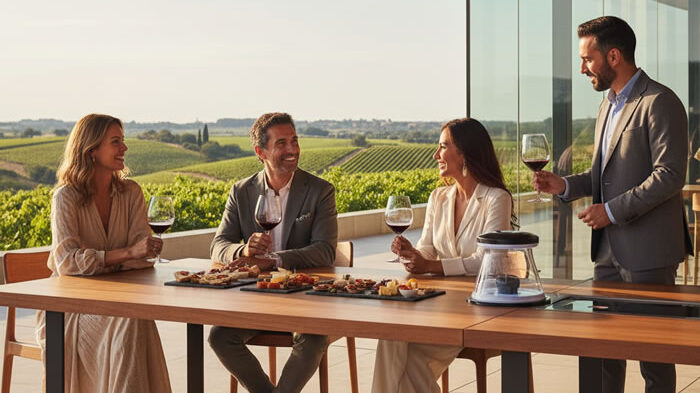
The Wine Tourism Experience: Rocim has spearheaded the movement to recover the Talha. Their “Amphora Experience” is a masterclass in advanced sommelierie. You will taste wines directly from the clay before they are even bottled. The tasting room, with infinite views of the Alentejan horizon, is the ideal theater to understand why the world has turned its gaze back to this region.
The Star Wine: Clay Aged Red The ultimate expression of the Vidigueira freshness. This wine carries notes of pomegranate, wild herbs, and a saline touch that is the signature of the local soil. It is vibrant, light in body but profound in spirit—the kind of wine you would bring to a dinner with a New York art collector to leave them speechless.
The Wow Factor: “Amphora Day.” Every November, Rocim hosts the world’s most important event dedicated to amphora wines, bringing together producers from Georgia, Italy, and across the peninsula. It is the “Met Gala” of ancestral wine, and if you secure an invitation, you are at the epicenter of the viticultural universe.


- L’AND Vineyards: Where Wine Meets the Stars
Architecture and Vibe: More than a winery, this is an existential retreat. Designed by the Promontorio studio, this resort and winery near Montemor-o-Novo is a masterpiece of discreet luxury. Organic architecture, natural materials, and total integration with the sky. Here, wine is part of a wellness ecosystem.
The Wine Tourism Experience: Tasting here does not happen at a bar; it happens in plush lounges or under the starlit sky. L’AND offers an exclusive “Wine Club” where members can craft their own vintage under the tutelage of the house enologist. The winemaking process is a dance of precision, seeking minimal intervention so the terroir can speak clearly.
The Star Wine: L’AND Reserva A wine that is pure silk. Dominated by Touriga Nacional and Alicante Bouschet, it reveals a nose of violets and ripe blackberries with a backdrop of black pepper. On the palate, it is impeccably balanced, with an acidity that cleanses the palate and invites the next sip. This is bottled elegance.
The Wow Factor: The “Sky Suites.” These rooms feature retractable roofs that allow you to sleep while gazing at the Milky Way—Alentejo boasts some of the clearest skies in Europe. Drinking a glass of their Reserva while counting constellations from your bed is the pinnacle of experiential luxury.

Gastronomy: The Pairing of Terrestrial Gods
Eating in the Alentejo is not a physiological act; it is a liturgy. Alentejan cuisine is humble in origin but aristocratic in flavor. It is built upon bread, olive oil, garlic, and wild herbs (cilantro and pennyroyal are sacred here).
- Porco Preto: Forget everything you think you know about pork. The Iberian black pig, acorn-fed in the montado, is the “Wagyu” of the peninsula. Order the secretos or plumas grilled over charcoal. The marbled fat melts into the power of a potent Alicante Bouschet.
- Açorda de Marisco: A thick bread soup, infused with industrial quantities of cilantro, garlic, and extra virgin olive oil, topped with fresh prawns or cod. Pair it with an Antão Vaz that has seen clay; the texture of the wine and the bread create a harmony that will make you close your eyes in reverence.
- Queijo de Serpa: A sheep’s cheese cured with thistle, boasting a semi-soft paste and a spicy kick. It is the perfect companion for a fortified wine or an aged Talha white.
- Conventual Sweets: The legacy of the cloistered nuns. Egg yolks and sugar in quantities that defy medicine but gratify the soul. The “Encharcada” or “Pão de Rala” provide the perfect finale to this banquet.
VIP Survival Guide: Alentejo on Your Own Terms
For those who accept nothing less than excellence:
- Logistics: Do not drive. The roads are beautiful but the distances are deceptive and the breathalyzer tests are strict. Hire a private chauffeur with enological knowledge or, if you feel adventurous, request a helicopter transfer from Lisbon directly to the private landing strips at Esporão or L’AND.
- Timing: Avoid July and August unless you wish to experience what a grape feels like in an oven. The best moments are spring (April-May), when the fields are neon green and blooming, or September to witness the harvest firsthand.
- Reservations: At these estates, “walk-in” is a foreign concept. Premium experiences must be booked at least three weeks in advance.
- Attire: “Alentejo Chic.” Linen clothing, wide-brimmed hats, and comfortable yet elegant footwear for walking through vineyards. Leave the ties at home; here, luxury is naturalness.
- The Insider Secret: If you can, visit the tiny village of Vila de Frades, the world capital of the Talha. You will find small taverns where locals still craft their own wine in century-old amphorae. It is the perfect grit to the glamour of the grand estates.
The Alentejo is not for everyone. It is for those who understand that a great wine is not measured by its price, but by its ability to stop time. It is for those who prefer the whisper of clay to the noise of the world. The Alentejo awaits you, but it is in no hurry. Neither should you be.