The Awakening of the Abyss: A Cinematic Introduction
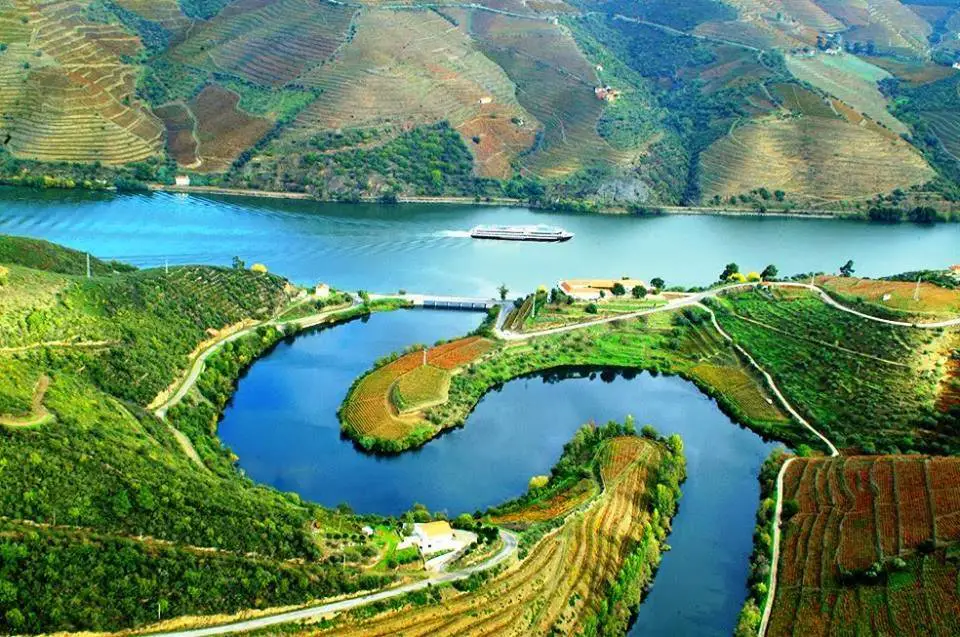
Dawn in the Arribes is not merely a meteorological event; it is a profound act of genuflection before the raw power of nature. Imagine, if you will, that the world grinds to a halt right at the jagged edge of a granite scar that cleaves the Iberian plateau in two. Here, there is none of the monotonous flatness of the Castilian cereal plains. Instead, there is a vertical plunge—a five-hundred-meter drop where the Douro River (or the Duero, depending on which way the wind blows from the West) writhes like a serpent of molten silver far beneath your boots.
I have tasted in the storied châteaux of Bordeaux and watched the morning mist descend upon the Napa Valley, but nothing truly prepares the spirit for the scent of La Raya. It is a complex, visceral perfume: the metallic humidity of the river clashing against sun-baked rock, wild thyme surrendering its essence to the heat, and that ancestral aroma of “the grandfathers’ soil”—a heady mix of decomposed slate and centuries of human sweat. Here, vineyards aren’t merely planted; they are conquered. These are the “bancales”—impossible terraces that defy both gravity and sanity, clinging to the precipice as if yearning to dive into the water to quench a thirst that has lasted for eons.
As you draw the cork from the first bottle while the fog dissipates, the sound is not just a “pop”; it is the turning of a key to a frontier that no longer exists. We are in “La Raya,” that mystical borderland between Spain and Portugal where wine recognizes no passports, only souls. That first sip is a revelation of unexpected freshness: a vibrant acidity that jolts the palate, whispering that this is not the Douro of heavy, over-oaked reds of yesteryear. This is a Douro of silk, of vertigo, and of an elegance that borders on the divine. Welcome to the route where wine is made with wings, and the landscape is drunk with reverence.

The Soul of the Rock: Context and Terroir
To understand the wines of the Arribes and La Raya, one must accept that here, geography is destiny. We are standing within a capricious microclimate—a Mediterranean oasis embedded in the frozen heart of a fierce continental climate. While the surrounding plateau shivers, these deep canyons trap the day’s heat, allowing oranges and olives to thrive alongside the vines. It is a visual miracle, looking like a Tuscan dream misplaced in the middle of Zamora and Salamanca.
The terroir itself is a character straight out of a Gothic novel: dark, profound, and brimming with secrets. The soil is a jagged amalgam of granite and gneiss, shot through with veins of quartz that glitter like diamonds when the sun hits the terraces. This mineral composition is what grants these wines their signature “electricity.” These are not wines that sit heavy on the tongue; they dance. They leave a trail of salinity and graphite that serves as the indelible signature of the rock.
And then, there is her: the Juan García. If the Tempranillo grape is the Queen Consort of Spain, the Juan García is the rebel princess hiding in the most abrupt slopes. She is a temperamental variety, thin-skinned and hyper-sensitive, shunning opulence to embrace subtlety. She produces wines of a translucent ruby hue, with a nose that evokes wild raspberries, wilted rose petals, and a dash of white pepper that stings the curiosity. Alongside her stands the Bruñal, a nearly extinct gem of astonishing tannic concentration, and the Malvasía Castellana, which in these lands acquires a creaminess and elegance that rivals the great whites of Burgundy. The terroir here is not just earth; it is a lingering sigh from the geological history of the Iberian Peninsula.
Cathedrals of Wine: An Analysis of Emblematic Estates
Architecture and Vibe Arriving at Hacienda Zorita within the Arribes del Duero Natural Park is akin to entering the private sanctuary of a 21st-century explorer who has decided that comfort is non-negotiable. The architecture pays homage to the original stone, integrating into the landscape almost invisibly. The vibe is one of relaxed exclusivity; here, luxury does not shout—it whispers. It is the place where the sophistication of a London gentlemen’s club meets the savage purity of the canyon.
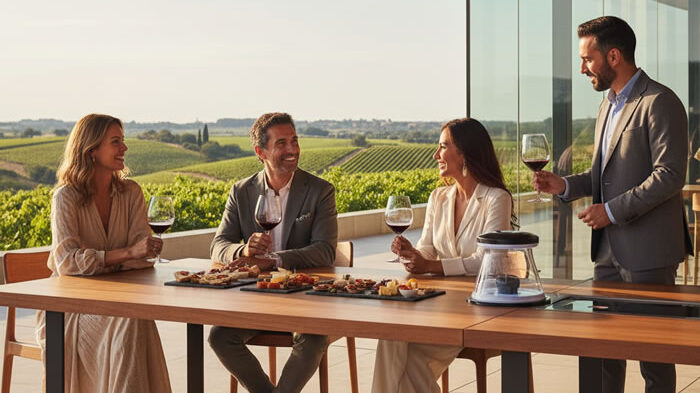
The Enotourism Experience Forget group tours with glossy brochures. Here, the experience begins with a private 4×4 safari through the natural reserve, spotting Verata cows and Iberian pigs roaming free. The descent into the cellar is a sensory journey: the air grows dense, heavy with the scent of cedar and Madagascar vanilla. The private tasting takes place at a massive hardwood table under lighting that seems designed by Caravaggio, accompanied by the absolute silence of the dehesa. It is the touch of Bohemian crystal against your fingertips and the echo of stories about the Dominican monks who once inhabited these lands.
The Star Wine: Magister The Magister is, quite simply, liquid velvet. It is a blend of noble varieties that has rested in new French oak barrels until achieving absolute roundness. On the nose, it is a banquet of black blackberries, bitter chocolate, and a base of pipe tobacco. On the palate, it is opulent, with tannins that feel as though they were polished by a master jeweler. It is not just wine; it is a manifesto of what this land can produce when perfection is the only goal.
The Wow Factor The “Dinner Under the Stars” at their private overlook above the Douro. Imagine a table impeccably set, the hoot of eagle owls in the cliffs, and lighting provided exclusively by candles, while the sommelier pours ancient vintages that aren’t even on the market. It is an experience that redefines the concept of an “unforgettable moment.”
Architecture and Vibe If Zorita is majesty, El Hato y el Garabato (in the village of Formariz) is avant-garde bohemian chic. Their winery is small, honest—an ode to the rehabilitation of the old with an exquisite eye for minimalist design. The atmosphere is vibrant, youthful, and deeply intellectual. People come here to discuss wine, art, and the resistance against the globalization of taste.
The Enotourism Experience There are no barriers here. The experience is an “immersion in the terraces.” You walk with the owners, José and Liliana, through centenarian vineyards of heartbreaking beauty. You touch the vines, twisted like Giacometti sculptures. The tasting feels like a gathering of friends in a dream country house, where bottles are uncorked that represent the purest expression of the plot. It is the luxury of transparency and human connection.
The Star Wine: Sin Blanca This wine is a tribute to the Juan García grape. It is vibrant, electric, almost rebellious. Notes of pomegranate, forest floor, and that graphite minerality that makes you salivate instantly. It is a “naked” wine, with a fruit purity that transports you directly to the vine. Drinking it is like biting into a fresh cluster on an October morning.
The Wow Factor Their collection of labels and the story behind each name. Every bottle chronicles a struggle, a local anecdote, or a reclamation of the landscape. It is wine transformed into liquid literature.
Architecture and Vibe Fermoselle is not a village with wineries; it is a winery with a village built on top of it. Beneath its stone streets lies a labyrinth of medieval cellars hand-carved into the granite. Visiting the premium projects in this area, such as the signature wines of Pascual Fernández or the recovered heritage of Frontaura, is like entering the underworld of luxury. The vibe is claustrophobic in a delicious, thrilling way.
The Enotourism Experience The tasting takes place thirty feet underground, in a cavity where the temperature is constant and time seems to have stopped 500 years ago. The sound of the cork popping echoes off the raw rock walls. It is an almost religious experience—a communion with the past where you taste wines of extremely limited production (some as few as 500 bottles) that can only be found right there.
The Star Wine: El Lagar de la Merced (Selección Especial) A wine of overwhelming complexity. Notes of dried figs, ash, exotic spices, and a structure that suggests it could live for a century. It is the reflection of the oldest vines in the area, some pre-phylloxera, which have survived by sheer miracle.
The Wow Factor The secret tunnel that connects some of the oldest subterranean wineries. Walking through these passages with a glass in hand is the closest thing to being an initiate in a secret society of pleasure.

Gastronomy and Pairing: A Banquet for the Senses
In this region, eating is not a physiological necessity; it is a liturgy. The reigning pairing is, without doubt, the Lechazo de Sayago (suckling lamb), roasted in a wood-fired oven until the skin is a crackling crystal and the meat melts at the mere thought of a fork. The richness of the lamb demands the piercing acidity of a Juan García to cleanse the palate, creating a nearly mystical balance.
We cannot forget the Arribes Cheese, a hard-paste sheep’s cheese aged in caves, developing notes of nuts and an elegant spiciness that calls for a barrel-fermented Malvasía white. And for the bold, the Farinato—a local sausage made with anise and bread—which, when served with farm-fresh eggs and runny yolks, finds an unexpected but perfect dance partner in the young reds of the region. This is a cuisine of product, of brutal honesty, where every ingredient tastes exactly as it should.
VIP Survival Guide: The Logistics of Exclusivity
For the traveler who accepts nothing less than excellence, the journey through this route must be as fluid as a fine Gran Reserva.



Don't just get there, get there in style.
Information
Follow Us
Payment channels