Mist Over the Douro: A Sensory Overture
Dawn in the Portuguese interior isn’t merely seen; it is felt. It isn’t a simple change of light; it is a choreography of elements that feels as though it has been rehearsed for centuries. Imagine waking up in a suite whose terrace hangs over the emerald abyss of the Douro River. The fog—that silken, grayish blanket the locals call morrinha—glides lazily between the schist terraces, hiding and revealing the vineyards like a hesitant lover.
The aroma hits you first, even before the first sip of coffee touches your lips. It is a complex fragrance: the dampness of ancient stone, the resinous perfume of nearby pines, and that ancestral scent of earth after a light rain—what scientists call petrichor, but here, quite honestly, smells like promise. It is the scent of a soil that has decided, after millennia of stubbornness, to become the best wine in the world.
We are in Mecca, but not one of austere pilgrimage. This is the Mecca of intelligent hedonism. Forget those saturated wine routes where buses spit out tourists with cameras around their necks and hurry in their souls. The Portuguese interior—from the vertical slopes of the Douro to the infinite plains of the Alentejo—is a sanctuary for those of us who understand that luxury isn’t the glitter of gold, but absolute silence broken only by the sound of a yielding cork. Here, time doesn’t run; it decants. Writing about these quintas is not a journalistic exercise; it is an act of poetic justice for the palate. Welcome to the final frontier of European refinement.
The Soul of the Rock: Terroir as Destiny
To understand why a glass of wine here carries the weight of history, we must talk about the soil. But don’t give me boring geological data; let’s talk about Touriga Nacional as if she were the protagonist of a Shakespearean tragedy: complex, structured, sometimes difficult to tame, but absolutely unforgettable.
In the Douro, the soil is schist (xisto). It is a laminar, hard, and selfish stone that forces the vine’s roots to drill through meters of solid rock in search of a single drop of water. That fratricidal struggle between the plant and the stone is what gives the wine its character. If wine were a character, the Douro’s would be an aristocrat of ancient lineage: serious, mineral, with an iron backbone wrapped in velvet.
The climate is the other great architect. “Nine months of winter and three of hell,” the locals say with a wry smile. This brutal thermal contrast is what fixes the aromas and concentrates the sugars. In the Alentejo, however, the soul shifts. Here, the sun is the absolute sovereign, a golden brush bathing plains of holm oaks and cork trees. The terroir is gentler, with clays and granites producing generous, solar wines that expand in the mouth like a sunset.
To understand the Portuguese terroir is to understand that wine isn’t “made” in the cellar; it is “extracted” from the stone. It is a mystical dialogue between the man who builds dry-stone walls and nature which, in return, hands him a nectar that seems to contain bottled sunlight.


Signature Retreats: Where Stone Becomes Poetry
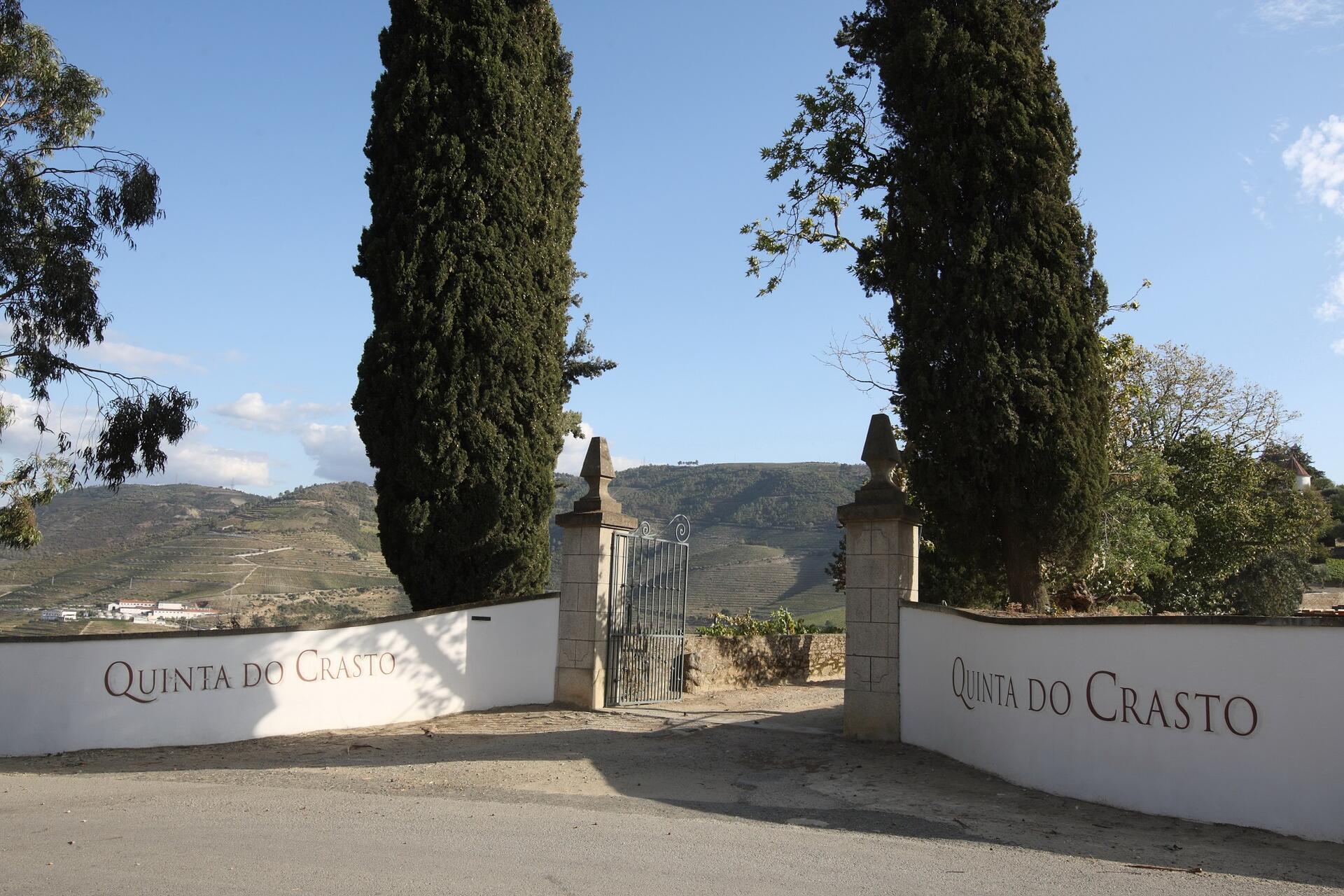
- Quinta do Crasto: The Watchtower of the Gods
Architecture and Vibe Arriving at Quinta do Crasto is a rite of passage. The road meanders almost implausibly until, suddenly, it appears: a manor house that seems to hang in the air on a promontory overlooking the river. Its architecture is the quintessence of Portuguese rural elegance—immaculate white walls, tiles (azulejos) that tell stories of past harvests, and that patina of “old money” that doesn’t need to shout to be noticed. But the true coup de théâtre is its infinity pool, designed by Pritzker Prize winner Eduardo Souto de Moura. It is, without a doubt, the most photographed and desired pool in the wine world—a mirror of water that seems to merge with the Douro 400 meters below.
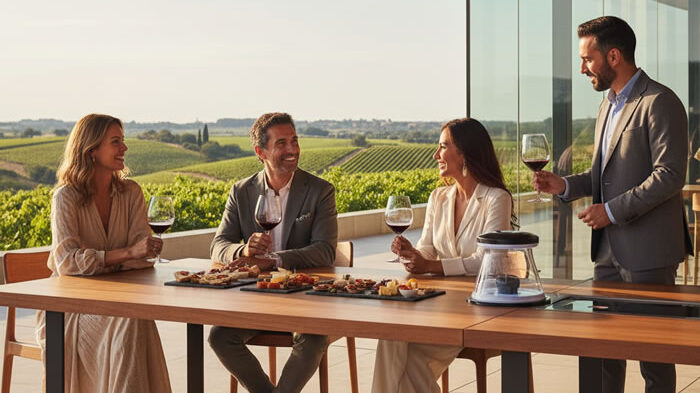
The Enology Experience You don’t come here for a “standard tasting.” You come to live the liturgy of the Douro. The premium experience begins with a private tour of the “Maria Teresa” vineyard, where century-old vines twist like Giacometti sculptures. The descent into the cellars is a journey into the cool womb of the earth. The sound of the cork popping in their private tasting room—adorned with dark woods and abyss views—is the prelude to a sensory symphony. The touch of the French oak barrels, aligned with military precision, reminds you that here, wine is treated with the reverence of a religious relic.
The Star Wine: Quinta do Crasto Vinhas Velhas Tasting this wine is like reading a Russian novel: it has layers, drama, and a sublime resolution. In a vertical tasting, the Vinhas Velhas presents itself as liquid velvet. Don’t just look for black fruit; look for notes of graphite, wilted violets, and that finish that evokes dawn over the schist. It is a wine with a tannic structure so fine it feels as if it were woven by angels.
The Wow Factor The private lunch on the terrace of the main house. It’s not just the food (which is exceptional); it’s the fact that, for a few hours, you are a guest of the Roquette family. The secret detail: the tunnel connecting the house to the ancient cellars, where the air hangs heavy with the aroma of decades of evaporation—the “Angel’s Share.”


- Six Senses Douro Valley: The Sanctuary of Liquid Wellbeing
Architecture and Vibe Located in the historic Quinta de Vale de Abrão, this isn’t just a hotel; it’s a statement of intent. The original structure is a 19th-century terracotta-colored mansion that looks like it stepped off a Visconti film set. However, its interior is a marvel of contemporary design, where the Asian luxury of Six Senses embraces Luso tradition. The vibe is one of relaxed sophistication: organic linen, diffused light, and a wine library that would make any bibliophile weep with joy.
The Enology Experience The “Wine Library” is the beating heart of the property. Imagine tasting sessions led by sommeliers who don’t just talk about polyphenols, but about human stories. The experience culminates in a “Sommelier for a Day” workshop where you can create your own blend. But the most exclusive touch is the private sunset cruise on a vintage wooden boat, navigating the river while a steward serves you a selection of Douro Superior whites that glow like liquid gold in the fading light.
The Star Wine: Vale Meão (Special Selection) While Six Senses isn’t a producer per se, its access to the region’s most exclusive vintages is unparalleled. Trying a Vale Meão on their terrace is to understand the power of the Douro. It is a wine with “muscle,” notes of rockrose, cistus, and fruit so vibrant it wakes the palate almost electrically.
The Wow Factor The spa’s Alchemy Bar. It’s not just for relaxation; it’s where wine by-products (seeds, skins) are used to create personalized treatments right in front of you. It is the ultimate synesthesia: the wine you drink is the same wine that heals your skin.




- Herdade do Esporão: The Minimalism of the Alentejo
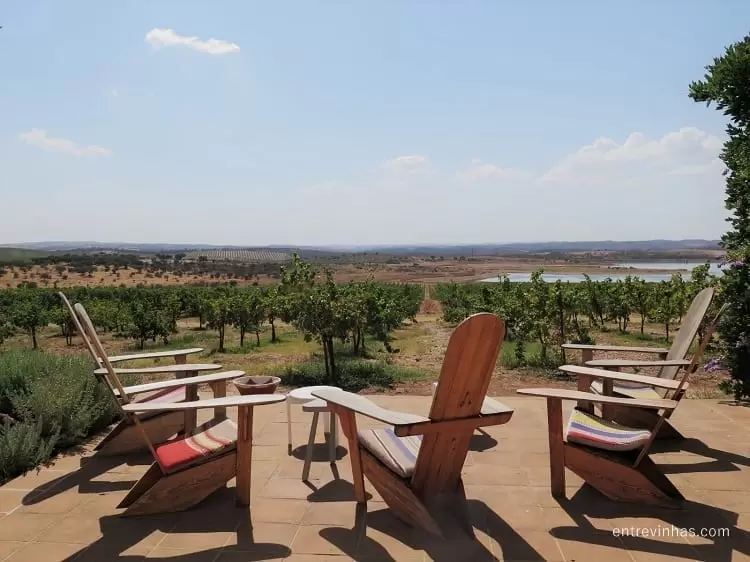
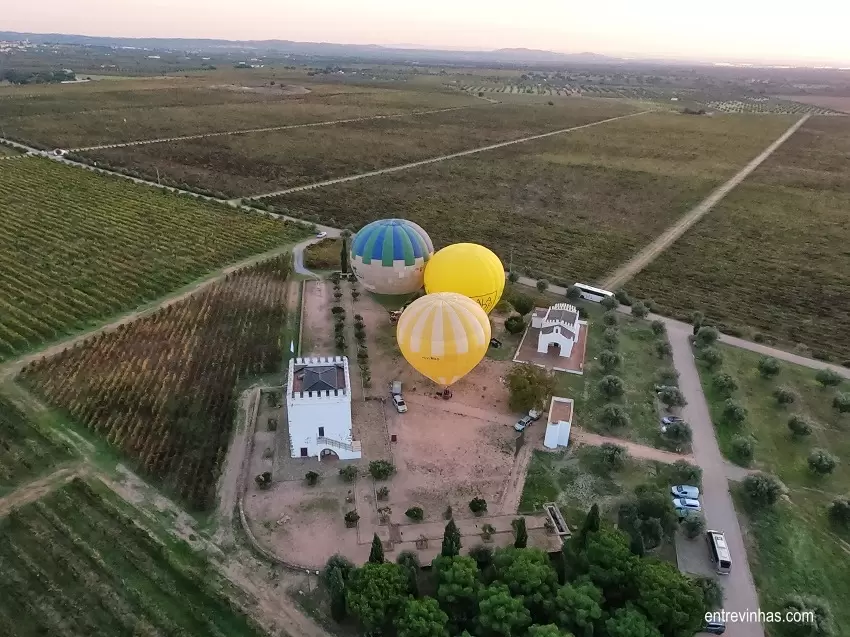
Architecture and Vibe We cross south to the Alentejo to find an ode to design. The Esporão winery is a bunker of concrete and light that integrates into the golden landscape as if it had always been there. It is pure avant-garde, with clean lines contrasting with the medieval tower guarding the property. The atmosphere is one of absolute “slow luxury”: here, luxury is space, the horizon, and light that seems filtered through a sieve of honey.
The Enology Experience The visit to the barrel cellars is an almost monastic experience. The silence is total, broken only by an occasional drip and the echo of your footsteps. The exclusivity here lies in the premium olive oil tasting before moving on to the wine—an exercise in Mediterranean purity. Afterward, you gain access to a private room where bottles not available on the general market are uncorked—gems from the “Family Reserve” shared only with those who show true devotion to the soil.
The Star Wine: Esporão Private Selection (Tinto) This wine is a warm embrace. Forget the subtlety of the north; this is exuberance. Notes of dark chocolate, ripe plums, and a touch of exotic spices. It is dense, opulent—a wine that fills the mouth and leaves a memory of elegant toastiness.
The Wow Factor The ampelographic garden. It is one of the largest in Europe, preserving almost extinct grape varieties. The secret detail: a private dinner under the stars in the middle of a field of millennial olive trees, illuminated only by torches and the Alentejo moon.

The Feast of the Senses: Gastronomy Bordering the Sacred
Eating in the Portuguese interior is a religious experience because it is based on the truth of the product. Do not look for unnecessary artifice; look for the essence. In the Douro, the mandatory pairing is the Leitão (suckling pig), whose crackling skin must break with the sound of fine crystal, paired with a high-structure red that cleanses the palate with its mineral acidity.
But the mystical moment arrives with the Queijo da Serra. A sheep’s cheese whose texture is so creamy it must be eaten with a spoon. Spreading this cheese on freshly baked rye bread and pairing it with a Vintage Port is, quite possibly, the closest a mortal can get to Olympus. The saltiness of the cheese and the complex, almost medicinal sweetness of the Port create a dialectical tension in the mouth that redefines the concept of pleasure.
In the Alentejo, let the Porco Preto (Iberian black pig fed on acorns) steal your breath away. Its marbled fat melts upon contact with the tongue, screaming for a wine with present but ripe tannins. Gastronomy here isn’t an accompaniment to the wine; it is its soulmate.
VIP Survival Guide: The Art of Disappearing in Style
For those seeking total exclusivity, the Portuguese interior requires white-glove logistics.
- Arrival: Forget conventional roads if you can avoid them. The most sophisticated way to reach the Douro is by private helicopter from Porto (a 20-minute scenic flight versus 2 hours of winding roads). Most of these quintas have their own helipads or coordinated landing zones.
- Local Transport: Hire a private chauffeur who knows the paved “goat paths.” You won’t want to worry about blood alcohol levels after a vertical tasting of six vintages.
- The “Off-the-Menu”: When booking, always ask for “barrel tastings.” Do not settle for what is on the menu; ask to taste the wine that is still sleeping in the wood. That is where the sommeliers reveal their best-kept secrets.
- Seasonality: Avoid August. Luxury is also thermal comfort. The best time is late September, during the harvest (vindima), when the air vibrates with the scent of fermenting must, or in May, when the green of the vineyards is almost blinding.
Portugal is not visited; it is absorbed, tasted, and ultimately, missed. These quintas are not just hotels or wineries; they are the last bastions of a Europe that still knows that beauty and time are the only luxuries that truly matter.